
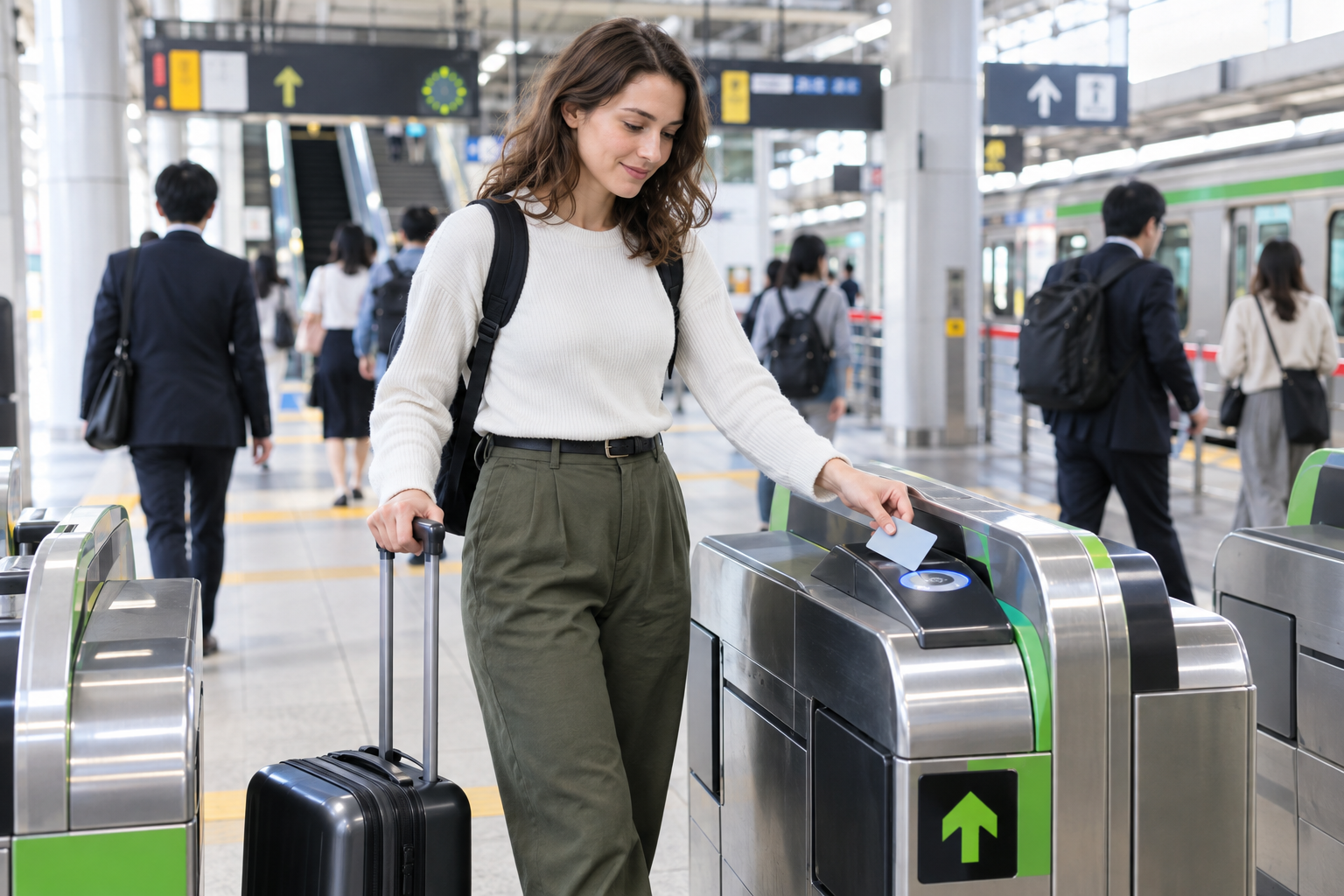
A Japanese transit IC card turns many local train, subway and bus journeys into a simple tap in and tap out. The same stored value can also pay at many convenience stores, vending machines and other participating businesses. Suica and PASMO are the best-known names in Tokyo, but major regional cards are widely interoperable. The card is a payment tool rather than an all-inclusive pass, so you still need to recognize the journeys that require a reservation, supplement or separate ticket.
Understand what an IC card actually does
A transit IC card stores prepaid value and deducts the correct local fare when you tap through a compatible gate. It saves you from calculating individual fares for most ordinary trips and can be reused until its balance or validity runs out. It does not automatically create a discount, reserve a seat or include every railway. Look for the nationwide IC interoperability symbol and confirm unusual routes with the operator.
Choose a physical visitor card or a phone
For a short Tokyo-area trip, the current visitor-focused physical options include Welcome Suica and TOURIST PASMO. Both have a limited validity period, so they suit temporary visits rather than future trips. A compatible iPhone or Apple Watch can instead hold a Suica, PASMO, ICOCA or TOICA in Apple Wallet. Android support varies more by device and purchase region, so do not assume every overseas Android phone can create a Japanese mobile IC card.
Buy only after checking current sales locations
Visitor-card products, stock and sales counters have changed several times in recent years. Check the current JR East or PASMO page shortly before arrival and note the terminal, railway company and operating hours. TOURIST PASMO launched in 2026 for eligible overseas visitors and is sold at designated locations around Haneda and Narita. Carry a backup payment method in case the counter or machine you planned to use is unavailable.
Top up in manageable amounts
Stored value is called a charge or balance in Japan. Physical cards can be topped up at compatible ticket machines, fare-adjustment machines and selected stores; many machines accept cash, while card support varies. TOURIST PASMO rules allow top-ups generally in ¥1,000 increments up to a ¥20,000 balance. Add what you expect to spend rather than loading the maximum, especially on visitor cards with expiry or restricted balance-refund rules.
Tap the same card when entering and exiting
At a railway gate, touch the card or device flat against the illuminated IC reader and wait for confirmation. Use the exact same card or mobile device at the exit so the system can calculate the journey. On buses, the required tap may be when boarding, leaving or both, depending on the operator. Watch what other passengers do and follow signs; if the reader rejects the card, ask staff instead of forcing the gate.
Keep separate tickets for premium and long-distance trains
Stored IC value usually covers the ordinary base fare on compatible local transport. A Shinkansen journey, limited-express train, reserved seat or Green Car may require a separate ticket or supplement. Some reservation systems let you link a designated IC card and tap through, but the reservation must already be set up correctly. IC cards also cannot always be used for one continuous trip across regional IC-service boundaries.
Use the remaining balance thoughtfully
The card can often pay at businesses displaying the appropriate transport-IC mark, including many convenience stores and vending machines. Check the balance at a ticket machine, after a gate transaction or in the relevant mobile wallet. Near the end of the trip, reduce the balance with normal journeys and small purchases instead of depending on a refund. Keep enough for the final airport transfer and retain cash or another card as backup.
Choose your format
Physical tourist card or mobile IC card?
Physical tourist card
Best for: visitors who want a simple card, use Android without a compatible Japanese transit wallet, or prefer not to depend on a phone battery.
Current Tokyo-area visitor products include Welcome Suica and TOURIST PASMO. Both are valid for 28 days from issue. Availability and sales locations can change.
Apple Wallet card
Best for: travelers with a compatible iPhone or Apple Watch and a supported payment card.
Apple says Suica, PASMO, ICOCA and TOICA can be added in Wallet on supported devices. Confirm device, software and payment-card requirements before relying on this option.
Quick comparison
| Option | Validity | Top-up | Key point |
|---|---|---|---|
| Welcome Suica | 28 days from purchase | At supported machines and locations | Visitor card for transport and participating shops; check current JR East sales points |
| TOURIST PASMO | 28 days from issue | Usually in ¥1,000 increments; balance maximum ¥20,000 | Sold to eligible overseas visitors at designated airport-area locations |
| Suica/PASMO in Apple Wallet | Depends on the card/service | Wallet with a supported payment card or supported cash machines | No physical card, but device and payment-card compatibility matter |
| Regional interoperable IC card | Varies | Varies by issuer and machine | ICOCA, TOICA and other major cards work widely where the nationwide IC symbol is displayed |
Product terms and sales points change. Read the issuer’s current page before deciding where to buy.
At the gate
Use the card in four steps
- Top up before entering.Keep enough balance for the complete journey. Physical-card machines commonly accept cash; card and language support vary.
- Tap once at the entry gate.Hold the card, iPhone or Apple Watch steadily over the IC reader until the gate confirms it.
- Use the same card or device to exit.Do not enter with a physical card and try to exit with the mobile version.
- Fix errors before walking away.If the gate closes or the balance is low, use a fare-adjustment machine or ask staff beside the gates.
Do not assume it covers every journey
Trips that may need another ticket
- Shinkansen: an IC balance alone is not a Shinkansen ticket. Use the operator’s ticket or reservation system and follow its IC-linking instructions.
- Limited express and Green Car: the base fare and the supplement can be separate. Buy the required limited-express or seat ticket.
- Travel between IC areas: nationwide interoperability does not always mean you can ride continuously across every regional boundary using only stored value.
- Non-participating routes: rural railways, some buses and older payment terminals may not accept the nationwide IC cards.
- Multiple travelers: one card or device cannot normally pay several adult train fares through the automated gate. Each traveler needs a card or ticket.
Before you leave the airport or station
Official IC-card information
Product information reviewed September 23, 2026.
Opening hours, prices, reservation rules and transport details can change. Confirm important details with the official operator before your visit.