
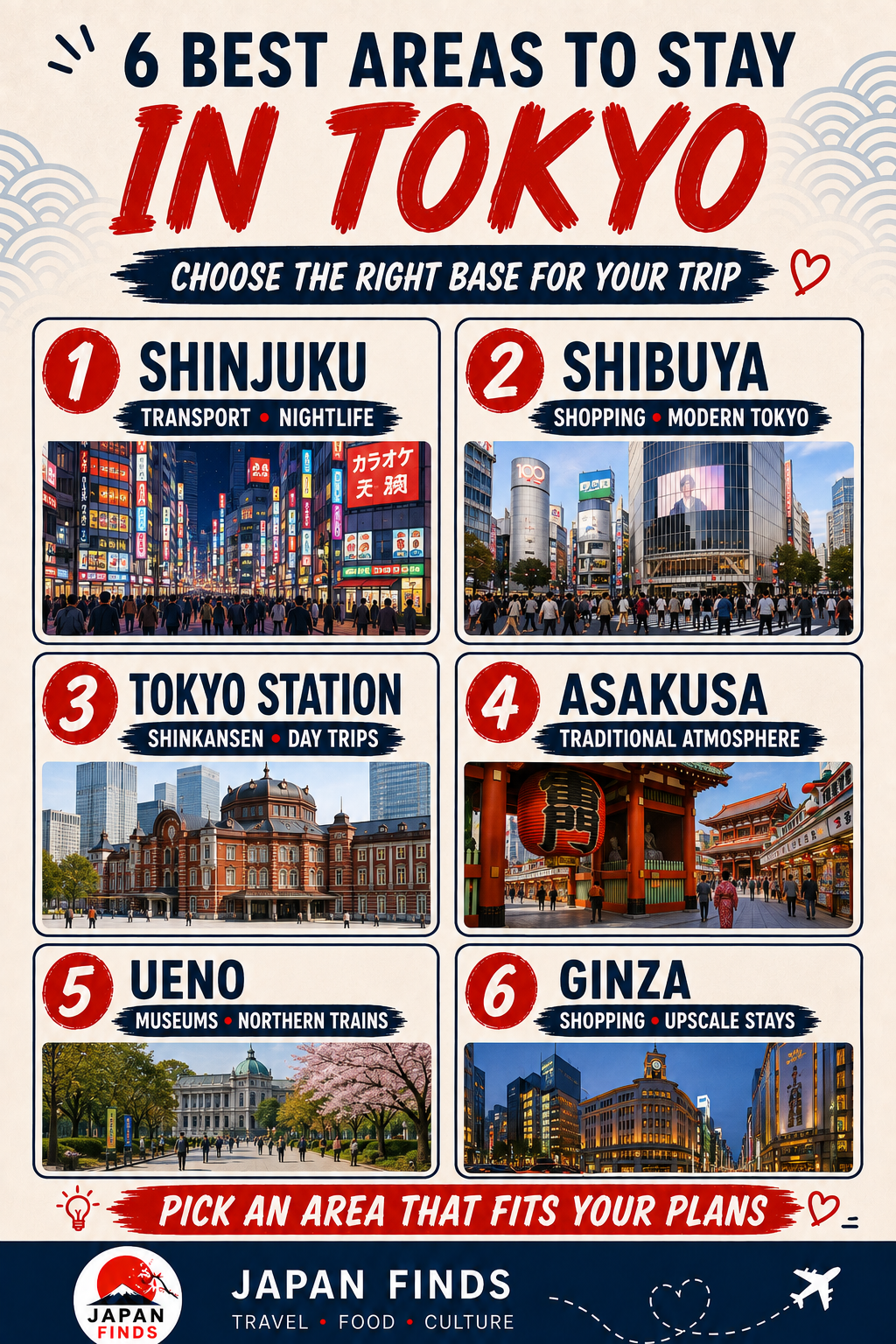
There is no single best neighborhood for every Tokyo trip. The right base depends on the places you plan to visit, how late you stay out, which airport or intercity train you use and whether you prefer a lively center or quieter evenings. For most first-time visitors, Shinjuku, Shibuya, Asakusa, Ueno, Ginza and the Tokyo Station area form a useful shortlist.
Shinjuku: best for transport options and late evenings
Shinjuku combines JR, private railway, subway and highway-bus connections with major shopping, dining and nightlife. It suits travelers who want busy evenings and day trips toward western Tokyo. The station is enormous, so a hotel that looks close on a map may still involve a long walk through crowded passages. Check the exact exit and walking route before booking.
Shibuya: best for modern Tokyo and nightlife
Shibuya puts contemporary shopping, restaurants, bars and the famous crossing close at hand. It works well for travelers who plan to spend time in Harajuku, Omotesando, Daikanyama and the western side of central Tokyo. Expect energy, crowds and higher room prices in the most convenient locations. Light sleepers should check recent guest comments about street noise.
Asakusa: best for traditional atmosphere
Asakusa centers on Senso-ji, Kaminarimon and streets with a strong old-Tokyo character. It is a good match for early temple walks, a calmer evening pace and access toward Tokyo Skytree. Tokyo Metro, Toei and Tobu services connect the area, but some western Tokyo journeys take longer than they do from Shinjuku or Shibuya.
Ueno: best for museums, value and northern rail connections
Ueno combines a major station with Ueno Park, museums, Ameyoko and straightforward access to Asakusa and Akihabara. JR and Shinkansen services make it practical for some northern Japan itineraries. The atmosphere changes quickly from park-side streets to the busy market and nightlife zone, so inspect the hotel’s immediate block rather than judging the whole area by the station name.
Ginza: best for polished surroundings and shopping
Ginza offers department stores, restaurants, galleries and an orderly central location within walking distance of Yurakucho and parts of the Tokyo Station area. Multiple subway lines make it useful for travelers who value comfort and refined evenings. Accommodation can be expensive, though business hotels around the edges sometimes provide a practical middle ground.
Tokyo Station and Marunouchi: best for intercity rail
Staying near Tokyo Station simplifies early Shinkansen departures and connections through the central rail network. Marunouchi is polished and convenient for the Imperial Palace area, while Yaesu offers buses, restaurants and a different mix of hotels. The trade-off is that the district can feel businesslike after office hours and prices near the station are often high.
Choose the hotel location before the hotel brand
Start with two or three neighborhoods that fit your itinerary, then compare hotels within a realistic walking radius of the station entrance you will actually use. Check airport access, late-night food, laundry, room size, luggage storage, cancellation terms and whether the room configuration truly fits every guest. A slightly less glamorous hotel in the right location can save time every day.
Split your stay only when it removes real friction
Changing hotels inside Tokyo usually costs more time than expected because checkout, luggage and check-in interrupt the day. One base is enough for most stays. A split can make sense when it supports a very early airport departure, a separate Disney-area visit or a longer itinerary with clearly different priorities. Otherwise, choose one well-connected neighborhood and travel by train.
At a glance
Which Tokyo area fits your trip?
| Area | Best for | Evening feel | Watch for |
|---|---|---|---|
| Shinjuku | Transport choice, nightlife, western Tokyo | Very lively | A huge station and long exit-to-hotel walks |
| Shibuya | Modern Tokyo, shopping, bars | Very lively | Crowds, noise and premium pricing |
| Asakusa | Traditional atmosphere, early sightseeing | Generally calmer | Longer rides to some western districts |
| Ueno | Museums, value, northern rail access | Mixed by block | Park-side and market-side streets feel different |
| Ginza | Shopping, dining, central polish | Refined | Higher prices in prime locations |
| Tokyo Station | Shinkansen and central connections | Quiet and businesslike | Cost and limited late-night neighborhood energy |
Choose your base in three steps
Mark your fixed plans
Place airports, reserved activities, day trips and intercity trains on the itinerary before choosing a neighborhood.
Protect your evenings
Stay near the kind of dinner and evening atmosphere you want. The final trip back matters more than saving one transfer at noon.
Check the real walk
Use the exact station exit and hotel entrance. Rail lines on a listing do not reveal stairs, underground passages or crowded crossings.
Before booking
Check the details that change the stay
- The exact walking route from the most useful station exit
- Airport and Shinkansen access for your actual arrival and departure
- Room size, bed layout and occupancy for every guest
- Recent reviews about noise, cleanliness and construction
- Luggage storage before check-in and after checkout
- Laundry, breakfast and late-night food nearby
- Cancellation deadline, local taxes and total price
Japan Finds may add clearly marked accommodation partner links after program approval. Neighborhood recommendations and comparison criteria remain editorially independent.
Plan the days around your hotel
Official information used for this guide
Area and transport information reviewed September 21, 2026. Check current routes and operating information before travel.
Opening hours, prices, reservation rules and transport details can change. Confirm important details with the official operator before your visit.