
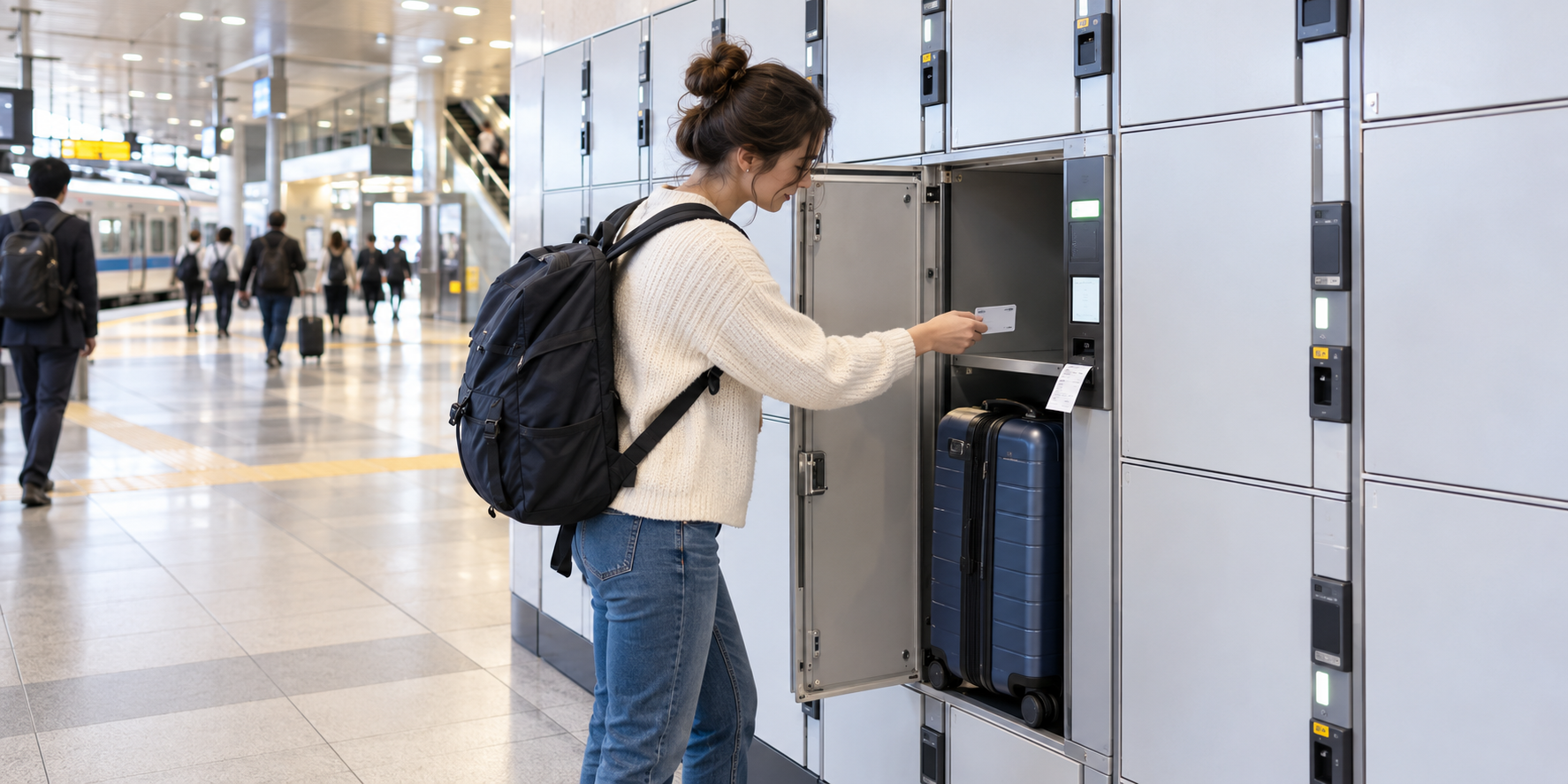
Coin lockers are useful when hotel check-in is hours away, you want to explore between trains or shopping bags are slowing you down. The basic routine is simple, but the details vary by locker: payment can use coins, an IC card or another method; the key can be physical, a PIN or the same IC card; and daily cut-off rules are set by the operator. Before closing the door, confirm the locker is large enough, photograph its location, understand the retrieval method and check when another charge begins.
Use a locker for short storage, not every luggage problem
A station locker works best when you will return to the same area later that day and the bag fits without force. It may be a poor choice when you are changing cities, carrying an oversized case, storing luggage for several days or returning after the station closes. For those situations, compare a staffed baggage counter, hotel storage or luggage forwarding. The right option is the one that removes backtracking from your itinerary rather than simply finding the first empty door.
Choose the station and side of the gates before choosing a locker
Large stations can have several operators, underground passages and many exits. A locker inside the paid area may require a valid journey or station-entry procedure when you return, while one outside the gates may be easier to access after sightseeing. Check the operator, floor, gate name and nearest exit. If your onward train leaves from a different station building, storing the bag at the wrong end can erase the time you hoped to save.
Treat locker sizes as machine-specific
Small lockers often suit daypacks or shopping bags, while medium and large doors may accept carry-on or larger suitcases. Dimensions and door shapes are not universal, and wheels or rigid handles can prevent an otherwise close fit. Do not force the door or leave straps trapped in the frame. If the case does not slide in comfortably, move to a larger locker or staffed counter instead of relying on a size label alone.
Follow the exact payment and key method shown on the machine
Traditional lockers may use coins and issue or retain a physical key. Electronic banks can use a central screen, receipt, PIN, barcode or supported transit IC card. With an IC-card locker, the card can act as both payment method and key, so use the same card to retrieve the bag and do not let its battery-dependent mobile version become unavailable. Payment methods cannot always be combined, and the process differs by model.
Save three location clues before walking away
Photograph the locker bank, the locker number and a nearby gate, exit or shop. Keep the receipt because it may list the location and contact details. On an IC-card locker, remember which physical card or phone was used; on a PIN system, protect the printed code. A station name alone is not enough in a complex interchange, and screenshots are safer than relying on mobile reception underground.
Read the charging period and retrieval deadline
A displayed fee may cover a defined period rather than a rolling 24 hours. Additional charges can begin at an operator-set time, and storage beyond the permitted period may cause the bag to be moved to another facility. Station and building opening hours also matter. Read the instructions on that locker, collect the bag with margin before your train and contact the listed operator if the door will not open or the permitted period has passed.
Have a fallback plan for full lockers
Popular stations can fill quickly, particularly large suitcase spaces. Check another locker bank, a nearby station exit, a staffed baggage counter, a tourist information facility or your accommodation. If you are moving between hotels, luggage forwarding may be more efficient than returning to the original station. Keep medicines, travel documents, valuables, fragile items and anything needed during the day with you, and follow the locker operator’s prohibited-item rules.
Choose the right luggage solution
Locker, counter or forwarding?
Best when the bag fits, you will return to the same place and retrieval is within the posted period.
Better for an oversized case, special handling or when you want a person to confirm the collection rules.
Ask your accommodation when sightseeing before check-in or after checkout.
Best when changing cities and you do not want to backtrack for the bag.
Do this before closing the door
Seven-point locker checklist
- Confirm access: note whether the locker is inside or outside the ticket gates.
- Test the fit: the suitcase and its wheels must clear the door without force.
- Read the fee period: find when an extra charge begins and the maximum storage period.
- Choose the key: understand whether retrieval uses a key, PIN, receipt or IC card.
- Keep essentials: remove your passport, medicine, valuables, charger and anything needed that day.
- Save the location: photograph the locker number, bank and nearest gate or exit.
- Set a reminder: allow time to collect the bag before the station, building or counter closes.
How the two common locker systems work
- Place the bag inside and close the door.
- Follow the central screen and select the indicated payment method.
- Tap the supported IC card when prompted.
- Take and keep the receipt.
- For pickup, select the retrieval option and tap the same card.
- Place the bag inside and close the door.
- Insert the exact accepted payment shown.
- Turn and remove the key, or securely keep the issued PIN or ticket.
- For pickup, return the key or enter the code as instructed.
- Pay any additional charge before the door opens.
The exact steps vary by model. Follow the instructions on the machine in front of you. JR East notes that supported Suica lockers use the IC card for both payment and unlocking, and cash cannot be combined with the card for that transaction.
Avoid the lost-locker problem
Record a four-part location card
Example: the JR, metro or private-railway area
Know whether a ticketed area separates you from the bag
Photograph a nearby fixed sign or landmark
Keep the receipt, PIN and support contact safely
What to do when the plan goes wrong
Try another locker bank or exit, then move to a staffed counter rather than circling the same bank.
Do not force it. Use a larger space or counter so the door, wheels and straps are not damaged.
Use your photos and receipt, then ask the station office or the operator listed on the receipt.
Confirm it is the same physical card or device used at storage and follow the machine’s help instructions.
Check for an extra-charge prompt. If the station or building is closed, collection may have to wait.
Contact the locker operator; it may have been transferred according to the posted terms.
Plan B
When another luggage service is smarter
- Changing hotels: send the main case ahead and carry an overnight bag.
- Airport arrival: compare airport storage and delivery before hauling luggage into the city.
- Oversized luggage: use a staffed counter that can measure and accept the item.
- Several days: check a formal storage service because station-locker periods are limited.
- Valuables or fragile items: keep them with you and follow each service’s acceptance rules.
Official sources and current details
Information reviewed October 2, 2026. Prices, dimensions, payment methods, access hours, prohibited items and storage limits vary by locker and operator; the instructions on the selected machine control.
Opening hours, prices, reservation rules and transport details can change. Confirm important details with the official operator before your visit.