
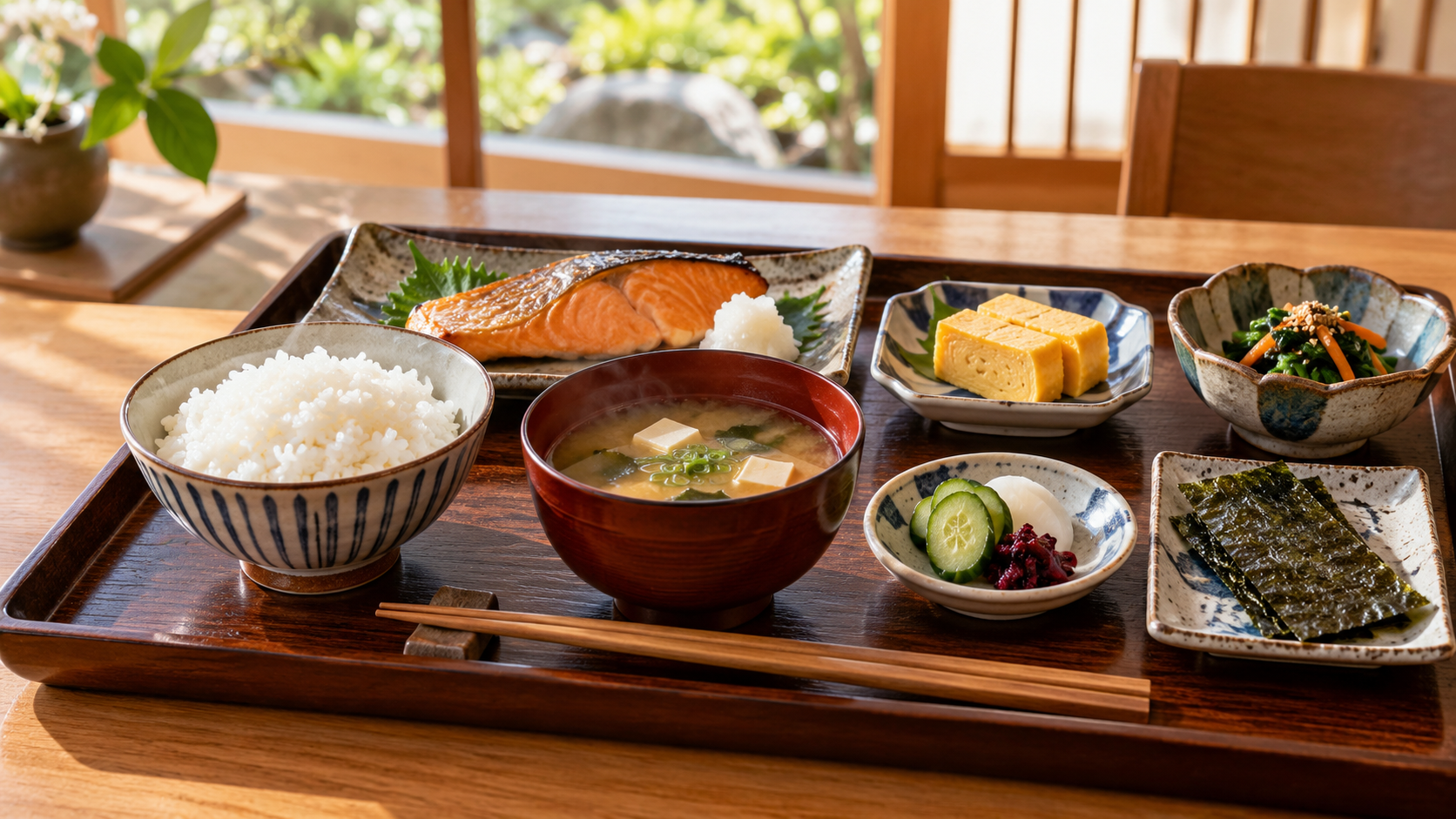
Breakfast in Japan is not one fixed meal. A traditional set often centers on rice and soup with several small dishes, while a hotel buffet may mix Japanese and Western choices. A ryokan breakfast can be a carefully presented part of the stay; a kissaten morning set may be toast, egg and coffee; and a convenience store can solve an early train departure. The best choice depends on your appetite, schedule, budget and dietary needs—not on finding one supposedly authentic breakfast every day.
Start with the basic shape of a Japanese breakfast
A traditional breakfast commonly places steamed rice at the center, accompanied by miso soup, a main item and smaller side dishes. Grilled fish, tamagoyaki, pickles, nori, tofu and vegetables are familiar examples, but no single tray is universal. Ingredients change by region, season, household and property. Think of the meal as several modest components that balance one another rather than as a large sweet breakfast or one oversized main dish.
Rice and soup anchor the meal
Rice is normally eaten alongside the other dishes rather than seasoned all at once. Miso soup may contain tofu, seaweed, mushrooms, clams or vegetables, and its stock can use fish-based dashi even when no meat is visible. Lift the rice or soup bowl closer when eating, use chopsticks for solid ingredients and drink the soup directly from the bowl. You do not need to combine everything or finish a food you strongly dislike.
Learn the common small dishes without treating them as guarantees
Grilled salmon or another local fish, rolled omelet, pickled vegetables, nori and natto frequently appear, but each property builds its own menu. Natto is fermented soybean with a sticky texture and strong aroma; try a small amount before mixing the whole pack into rice. A raw or soft-cooked egg may also be offered. Check what is actually included instead of assuming every Japanese breakfast contains the same dishes.
Use hotel and ryokan breakfast for different travel days
A hotel buffet is useful when you want flexibility, familiar options and a fast start. Take a small first plate and return for more rather than wasting food. A ryokan breakfast is usually slower and may feature local or seasonal dishes as part of the accommodation experience. Confirm the service window, meal location and latest arrival time the night before; a fixed breakfast cannot always be moved to suit an early train.
Try a café morning set when you want a lighter start
Many cafés and old-style kissaten offer a morning set during limited hours. A drink may come with toast and an egg, while larger sets can add salad, yogurt or other sides. The system and available days vary by shop, so read the sign or menu rather than assuming breakfast is included with every coffee. This is a comfortable option when you want to sit down without committing to a large hotel meal.
Use convenience stores, bakeries and chains for early departures
For a grab-and-go morning, convenience stores commonly sell onigiri, sandwiches, fruit, yogurt, coffee and other packaged foods. Bakeries near stations offer sweet and savory breads, while restaurant chains may serve economical set meals early in the day. Availability and opening hours vary by branch. If you plan to eat on a train, choose food appropriate for that service and avoid strong aromas on local commuter trains.
Check ingredients instead of relying on appearance
A vegetable side dish can contain fish stock; miso soup may use bonito dashi; omelets and sauces can contain soy, wheat or other allergens; and bread, dressings and processed foods have their own ingredients. Vegetarian, vegan, halal and allergy needs require specific confirmation. Ask the accommodation before arrival when meals are included, use packaged-food labels where available and never treat removing a visible topping as proof that the remaining dish is suitable.
Match breakfast to your morning
Which Japanese breakfast option fits your day?
Choose a hotel buffet so you can sample small portions of both Japanese and familiar dishes.
Book a ryokan plan with breakfast and leave enough time for the full service.
Look for a kissaten or café “morning set” during its posted hours.
Use a convenience store or station bakery and buy before boarding.
Try toast and coffee, an onigiri, fruit or yogurt instead of forcing a full set.
Choose a place that can confirm ingredients before ordering or booking.
A typical set, decoded
What may be on a Japanese breakfast tray
| Item | What to expect | What to check |
|---|---|---|
| Gohan | Steamed Japanese rice; the center of many traditional sets | Rice toppings and mixed-rice ingredients vary |
| Miso shiru | Miso soup with tofu, seaweed, vegetables or local ingredients | Dashi may contain fish even when the soup looks vegetarian |
| Yakizakana | Grilled fish such as salmon, mackerel or a regional catch | Fish species, bones and salt level |
| Tamagoyaki | Rolled omelet that may taste sweet or savory | Egg, soy sauce, dashi and possible wheat |
| Tsukemono | Small portion of pickled vegetables | Salt, seasonings and alcohol-containing ingredients |
| Nori | Dried seaweed, sometimes in an individual packet | Seasoned varieties can contain extra flavorings |
| Natto | Sticky fermented soybeans, often mixed with sauce and mustard | Soy and ingredients in the included sauce |
| Kobachi | A small side dish, often vegetables, tofu or a regional preparation | Stocks and sauces may contain fish, soy or wheat |
This is a recognition guide, not a fixed menu. A real breakfast may include only some of these items or completely different regional dishes.
Compare the main breakfast choices
Flexible portions and both Japanese and Western choices. Check whether breakfast is included and when the final entry is.
A slower meal that may reflect the region and season. Protect the service time in your itinerary.
Morning sets often combine a drink with toast, egg or salad during limited hours.
Useful for an early departure. Read labels and choose food that travels neatly.
Expect sweet and savory breads, sandwiches and drinks; station branches can be practical.
Some branches serve Japanese-style morning sets with easy touch-screen ordering.
Simple breakfast etiquette
Six habits that make the meal easier
- Check the service window: breakfast hours can end earlier than expected.
- Take only what you can finish: start small at a buffet and return if needed.
- Keep the tray organized: there is no required eating order, so alternate naturally among dishes.
- Lift small bowls: bringing the rice or soup bowl closer is normal.
- Do not plant chopsticks upright: rest them on the holder or designated edge.
- Return shared items promptly: keep buffet utensils and condiment areas ready for the next guest.
Hidden ingredients matter
Dietary and allergy checklist
- Ask whether soup and simmered vegetables use fish-based dashi.
- Check soy sauce and dressings when avoiding wheat or soy.
- Confirm eggs, dairy and bread ingredients separately.
- For ryokan or included hotel meals, contact the property before the cancellation deadline.
- Use a precise Japanese allergy card for serious allergies and do not rely on visual inspection.
- Pack a known-safe backup for early departures or rural stays.
Book breakfast only when it helps the itinerary
when nearby cafés open late, the first day feels unfamiliar or a buffet lets your group choose independently.
when you have a very early train, want to explore local cafés or the rate difference is poor value for your appetite.
when the meal is part of the cultural stay and you can protect the service time.
Official sources and further reading
Information reviewed October 1, 2026. Menus, hours, ingredients and dietary support vary by property and branch.
- Japan National Tourism Organization: breakfast options to fit your travel plans
- Japan National Tourism Organization: Japanese ryokan guide
- Japan National Tourism Organization: kissaten and morning sets
- Ministry of Agriculture, Forestry and Fisheries: The Washoku Way
- Consumer Affairs Agency: food labeling information
Opening hours, prices, reservation rules and transport details can change. Confirm important details with the official operator before your visit.