
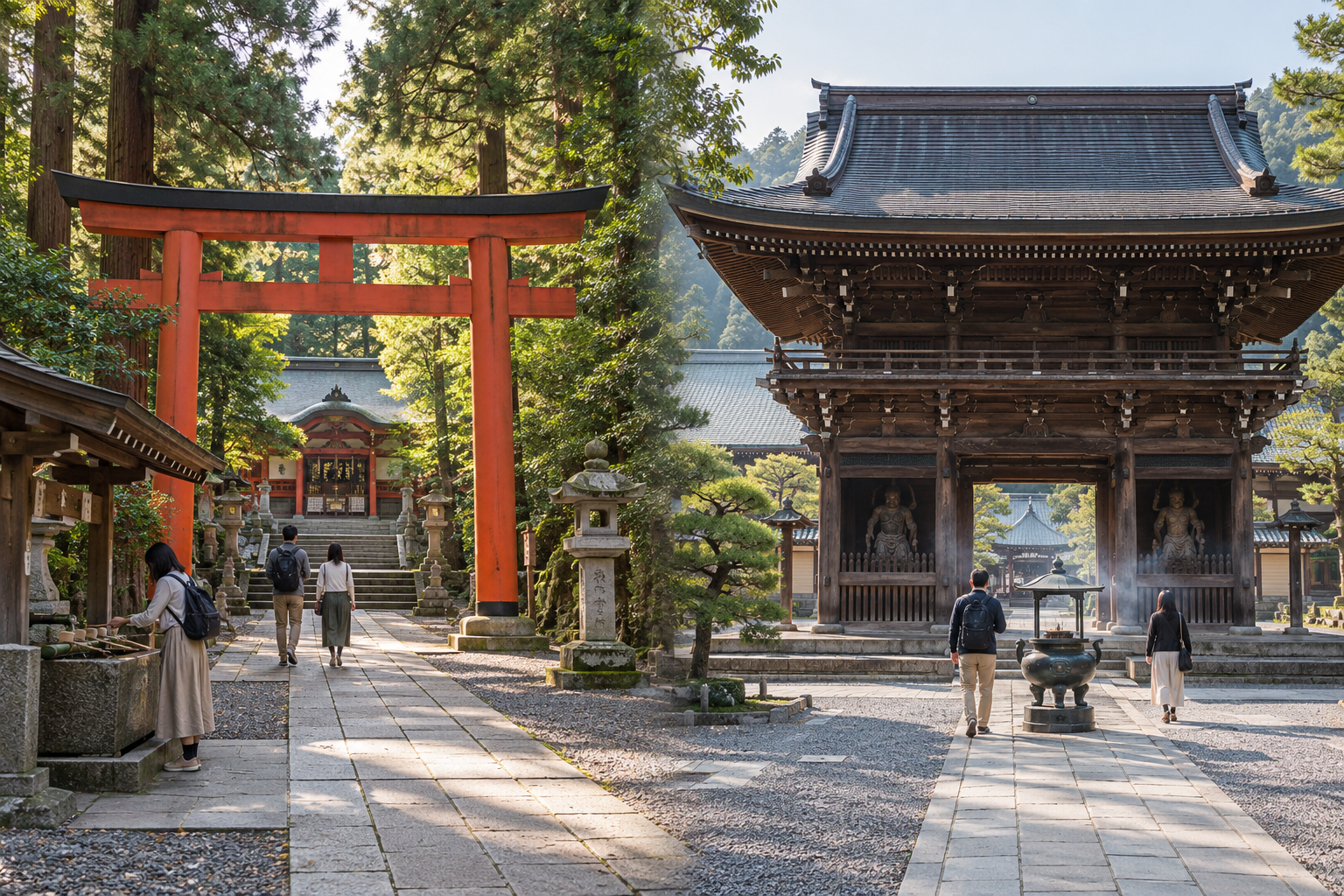
A torii usually points to a Shinto shrine, while a roofed sanmon gate often marks a Buddhist temple. That is the quickest visual clue, but Japan’s religious history is more connected than a simple either-or test suggests: Shinto and Buddhism coexisted for centuries, and shrines and temples can stand beside one another. For a respectful visit, identify the site, slow down, follow its signs and remember the biggest practical difference at the place of prayer: clapping is common at shrines, while temple prayer is normally silent with no clapping.
Start with the gate, then confirm with the grounds
A torii—two vertical posts supporting horizontal crosspieces—is the strongest clue that you are entering a Shinto shrine. A Buddhist temple commonly has a roofed gate, sometimes called a sanmon, and may display guardian figures, an incense burner, a pagoda or a main hall containing Buddhist images. Colors alone are unreliable: both traditions can use vermilion, natural wood and elaborate roofs. Use several clues and the site’s English name or signs when available.
Understand what each place is for
Shrines belong to Shinto and honor kami, sacred presences associated with deities, nature, places, communities or historical figures. Temples are places of Buddhist worship and practice, representing different schools and traditions. Many visitors in Japan go to both, and the two traditions influenced one another for centuries. Treat each as an active sacred place rather than only a sightseeing attraction.
At a shrine, use the usual two-bow, two-clap, one-bow pattern
Pause and bow at the torii if appropriate, then walk slightly to one side rather than assuming the center of the approach is ordinary foot traffic. Purify at the temizu basin when it is open. At the worship hall, offer a coin quietly, ring the bell if one is provided, bow twice, clap twice, pray with hands together and finish with one bow. This is a common pattern, but some shrines use different customs, so follow posted instructions.
At a temple, pray quietly and do not clap
Bow respectfully at the gate and proceed calmly. If there is a purification basin, use it as directed. Some temples invite visitors to offer incense; light it safely, extinguish the flame by waving rather than blowing and place it in the burner. At the main hall, make an offering if you wish, join your hands and pray silently. Do not clap. Remove shoes wherever signs or staff request it.
Purification is respectful, but never force the ritual
Where ladles are provided, rinse the left hand, then the right, pour water into a hand to rinse the mouth without touching the ladle to your lips, and keep the water away from the basin. Some sites now use simplified or contact-free methods, and a closed basin should be left alone. The goal is respectful preparation, not perfect performance. If no purification facility is available, continue quietly.
Photography rules change from one area to another
Outdoor buildings may be photographable while an inner sanctuary, prayer area, ceremony or statue is not. Check signs before raising a camera, keep tripods and bags out of walkways, silence the phone and never photograph worshippers at close range without permission. Restricted ropes, doors and platforms mark real boundaries. A beautiful image is not worth interrupting prayer or crossing into a closed area.
Receive goshuin and omamori with the right mindset
Goshuin are calligraphed seals offered at many shrines and temples after worship; they are not ordinary souvenir stamps. Present the book open to the desired page, follow the stated donation and collection procedure, and do not place unrelated tourist stamps in a goshuincho. Omamori are protective amulets connected to particular wishes. Availability, reception hours and rules vary by site, so ask staff politely and accept that some places do not offer them.
A 30-second identification guide
Look for several clues, not just color
| Clue | Shinto shrine | Buddhist temple |
|---|---|---|
| Entrance | Torii gate | Roofed gate or sanmon |
| Sacred focus | Kami | Buddhist teachings and images |
| Common visual cues | Shimenawa rope, komainu guardians, worship hall | Incense burner, pagoda, bell, Buddhist statues |
| Prayer | Usually two bows, two claps, one bow | Hands together, silent prayer, no clapping |
| Name clue | Jinja, jingu, taisha | Ji, dera or in |
These are useful clues, not a test that overrides the site itself. Shrines and temples sometimes share neighboring or historically connected grounds. Read the signs and follow local instructions.
At a Shinto shrine
The usual worship sequence
- 1Pause at the torii
Bow if appropriate and enter without treating the center line as ordinary walking space.
- 2Purify
Use the temizu basin when it is open and follow the site’s method.
- 3Offer and ring
Place a coin quietly and ring the bell only when one is provided.
- 4Two bows, two claps
Bow deeply twice, clap twice and pray with hands together.
- 5Finish with one bow
Step away without blocking the next worshipper and bow again at the torii when leaving if appropriate.
Local practice comes first: not every shrine uses the same number of claps or the same route. Follow posted instructions and staff guidance.
At a Buddhist temple
A calm, no-clapping sequence
- 1Bow at the gate
Enter calmly and respect any threshold or route instructions.
- 2Purify if available
A temple may have a water basin similar to one at a shrine.
- 3Offer incense if invited
Extinguish the flame by waving, never by blowing it out with your mouth.
- 4Offer and pray silently
Join your hands and bow. Do not clap.
- 5Follow building rules
Remove shoes and stop photography wherever signs or staff request it.
When a temizu basin is open
Purify without touching the ladle to your mouth
Hold the ladle in your right hand and rinse the left.
Switch hands and rinse the right.
Pour water into your hand; never drink directly from the ladle.
Keep used water away from the basin and return the ladle as directed.
Seven mistakes that matter more than perfect choreography
Temple prayer is normally silent with hands together.
A site’s posted method takes priority over a general travel guide.
Outdoor permission does not imply indoor permission.
Keep distance, silence the phone and never use flash.
Sacred and staff-only areas are real boundaries.
Move aside before checking photos, maps or messages.
Worship first and treat the seal and calligraphy respectfully.
After worship
Goshuin, omamori and omikuji
A sacred seal and calligraphy offered at participating shrines and temples. Present the book open and follow the stated donation and collection procedure.
An amulet associated with a purpose such as safe travel, study or health. Do not open the fabric pouch.
A written fortune. Follow the site’s instructions if you choose to tie it to a designated rack.
Official sources and local rules
Information reviewed October 5, 2026. Ritual details, photography areas, opening hours, ceremonies and goshuin procedures vary. Follow each shrine or temple’s current signs and staff guidance.
Opening hours, prices, reservation rules and transport details can change. Confirm important details with the official operator before your visit.