
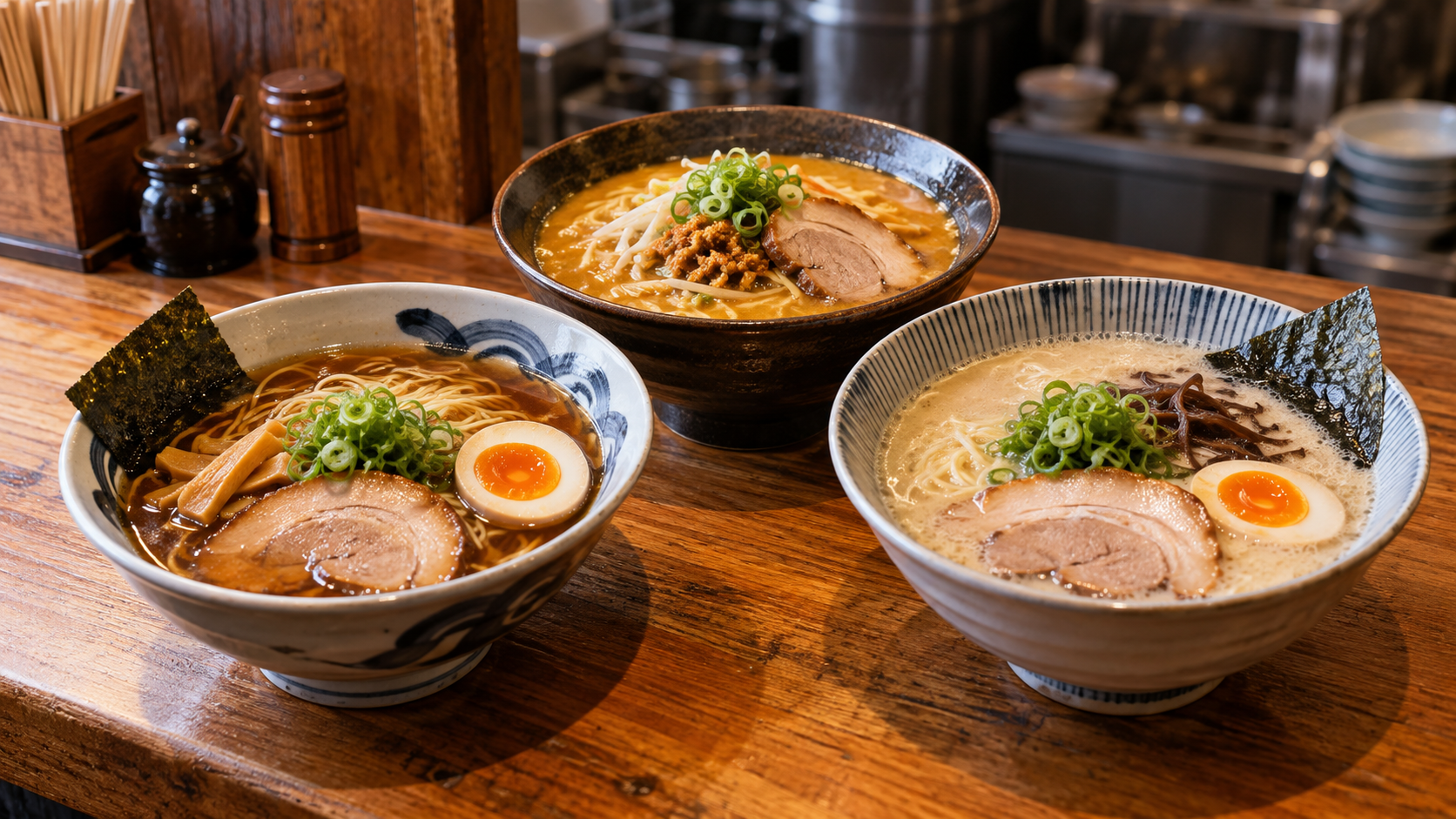
Ramen labels can be confusing because they do not all describe the same part of the bowl. Shoyu, shio and miso usually name the seasoning, tonkotsu names a pork-bone stock, while tsukemen and mazesoba describe how the noodles are served. A shop can therefore sell tonkotsu-shoyu ramen or a miso broth built on pork and chicken stock. Use the seven categories below as a practical tasting guide rather than a rigid family tree, and always check ingredients when dietary restrictions matter.
Shoyu ramen: savory, aromatic and widely available
Shoyu means soy sauce. The seasoning gives the soup an amber-to-dark-brown color and a savory aroma, but the underlying stock may contain chicken, pork, fish, vegetables or a combination. Tokyo-style bowls are commonly associated with shoyu, often with relatively clear soup, curly or straight noodles, sliced chashu, bamboo shoots and green onion. Choose it when you want a balanced first bowl, while remembering that dark color does not automatically mean the soup will be heavy.
Shio ramen: clean-looking and seasoning-forward
Shio means salt and is one of the three major seasoning categories. It is often presented as a pale or clear soup that lets the aroma of the stock stand out. The stock itself can still contain chicken, pork, seafood or dried fish, so “shio” does not mean vegetarian or allergen-free. It is a useful choice for travelers who prefer a lighter-looking bowl, but richness varies by shop and a clear soup can still have concentrated flavor and oil.
Miso ramen: deep, warming and especially linked to Sapporo
Miso ramen uses fermented soybean paste as a central seasoning, creating a rounded, robust flavor that works well with garlic, ginger, vegetables and aromatic oil. Sapporo is particularly famous for miso ramen, including bowls topped with corn, butter or local seafood. The stock may still use pork, chicken or fish. Choose miso when you want a fuller and more warming flavor, especially in cold weather, rather than assuming every miso bowl tastes the same.
Tonkotsu ramen: creamy pork-bone stock
Tonkotsu refers to pork bones used for the stock rather than to a seasoning. Prolonged high-heat cooking can produce a pale, cloudy and rich soup. Hakata-style ramen in Fukuoka is a famous example, commonly served with thin straight noodles, sliced pork, green onion and wood-ear mushroom. Some shops let you choose noodle firmness and order kaedama, an extra portion of noodles for the remaining soup. Tonkotsu can also be seasoned with shoyu, shio or miso.
Tsukemen: noodles and dipping soup served separately
Tsukemen places the noodles in one dish and a concentrated dipping soup in another. Lift a small portion of noodles, dip it briefly and eat; soaking the entire serving can overpower the noodles and cool the soup quickly. Noodles may arrive cool even when the dipping soup is hot, though shops can offer different temperature choices. After the noodles, some restaurants provide soup-wari, a lighter stock used to dilute the remaining dipping sauce.
Mazesoba or abura soba: ramen without a bowl of soup
Mazesoba and abura soba are brothless or nearly brothless noodle styles dressed with concentrated sauce, flavored oil and toppings. Mix from the bottom thoroughly before eating so the sauce coats every strand. Chili oil, vinegar, garlic or other table seasonings may be provided for gradual adjustment. Names and preparations vary by shop; “soba” here can refer to the dish name and does not necessarily mean buckwheat noodles.
Regional ramen: let the destination choose the bowl
Japan has many local styles that combine seasoning, stock, noodles and toppings in distinctive ways. Sapporo is known for miso ramen, Hakata for thin-noodle tonkotsu, Kitakata for thicker curly noodles and Tottori for beef-bone stock. Regional bowls often overlap the categories above, so look for the city or prefecture name rather than expecting a completely separate taxonomy. Trying the local specialty is one of the easiest ways to connect a meal with the place you are visiting.
Choose by the experience you want
One-minute ramen selector
Start with shoyu ramen.
Look for shio ramen.
Choose miso ramen.
Try tonkotsu ramen.
Order tsukemen.
Try mazesoba or abura soba.
These labels can overlap. A bowl may combine pork-bone stock with shoyu seasoning, or use miso with chicken and pork stock.
Seven ramen styles at a glance
| Style | Main clue | Good first choice if you want… |
|---|---|---|
| Shoyu | Soy-sauce seasoning; often amber or brown | A classic savory bowl with broad variety |
| Shio | Salt seasoning; often pale or clear | A cleaner-looking soup that highlights the stock |
| Miso | Fermented soybean-paste seasoning | Round, bold flavor and a warming bowl |
| Tonkotsu | Cloudy pork-bone stock | Rich soup and, in Hakata style, thin noodles |
| Tsukemen | Noodles and concentrated dipping soup are separate | More noodle texture and control over each dip |
| Mazesoba / abura soba | Little or no soup; sauce and oil coat the noodles | A mixable, topping-focused bowl |
| Regional ramen | A city or prefecture name signals a local combination | A food experience connected to your destination |
At the shop
How to order ramen in five steps
- Read the entrance: check the specialty, queue rules and whether you should buy a ticket first.
- Use the machine: insert accepted payment, select the bowl and toppings, then collect the ticket and change.
- Hand over the ticket: staff may ask about noodle firmness, portion size or flavor strength.
- Eat while hot: slurping is acceptable but optional; keep bags and conversation compact in a small shop.
- Leave after finishing: you do not need to drink all the soup, especially when a queue is waiting.
Check the complete bowl
Dietary and allergy notes
- Shoyu, shio and miso describe seasoning; their stocks may still contain pork, chicken, fish or shellfish.
- Vegetable toppings do not make the soup vegetarian or vegan.
- Ramen noodles normally contain wheat and may contain egg; recipes vary.
- Sauces and toppings can contain soy, sesame, fish products and other allergens.
- If an allergy is serious, use an accurate Japanese allergy card and choose a shop that can confirm ingredients.
Five first-timer mistakes
Assuming broth color alone tells you every ingredient.
Choosing a ticket-machine button only by price without checking the bowl or topping.
Ordering kaedama after drinking most of the soup.
Leaving tsukemen noodles submerged until the dipping soup turns cold.
Lingering at the counter after finishing when other guests are waiting.
Official ramen resources
Guidance reviewed September 29, 2026. Recipes, ingredients, ordering systems and terminology vary by restaurant.
Opening hours, prices, reservation rules and transport details can change. Confirm important details with the official operator before your visit.