
Ten days is enough for a strong first look at Tokyo, Kyoto and Osaka when you resist the urge to add too many hotel changes. This route uses four Tokyo nights, three Kyoto nights and two Osaka nights, assuming arrival in Tokyo and departure from Kansai International Airport. Treat it as a framework: preserve the sequence and overnight bases, then adapt individual days to your interests, season and energy.
Day 1: arrive in Tokyo and keep the plan small
Clear the airport, reach the hotel and choose one easy activity near your base. A neighborhood walk, simple dinner and convenience-store stop are enough. Do not attach a prepaid attraction to an arrival day: immigration, luggage, transport and fatigue are unpredictable. Before sleeping, confirm the next morning’s route and make sure your phone, payment options and offline hotel address are ready.
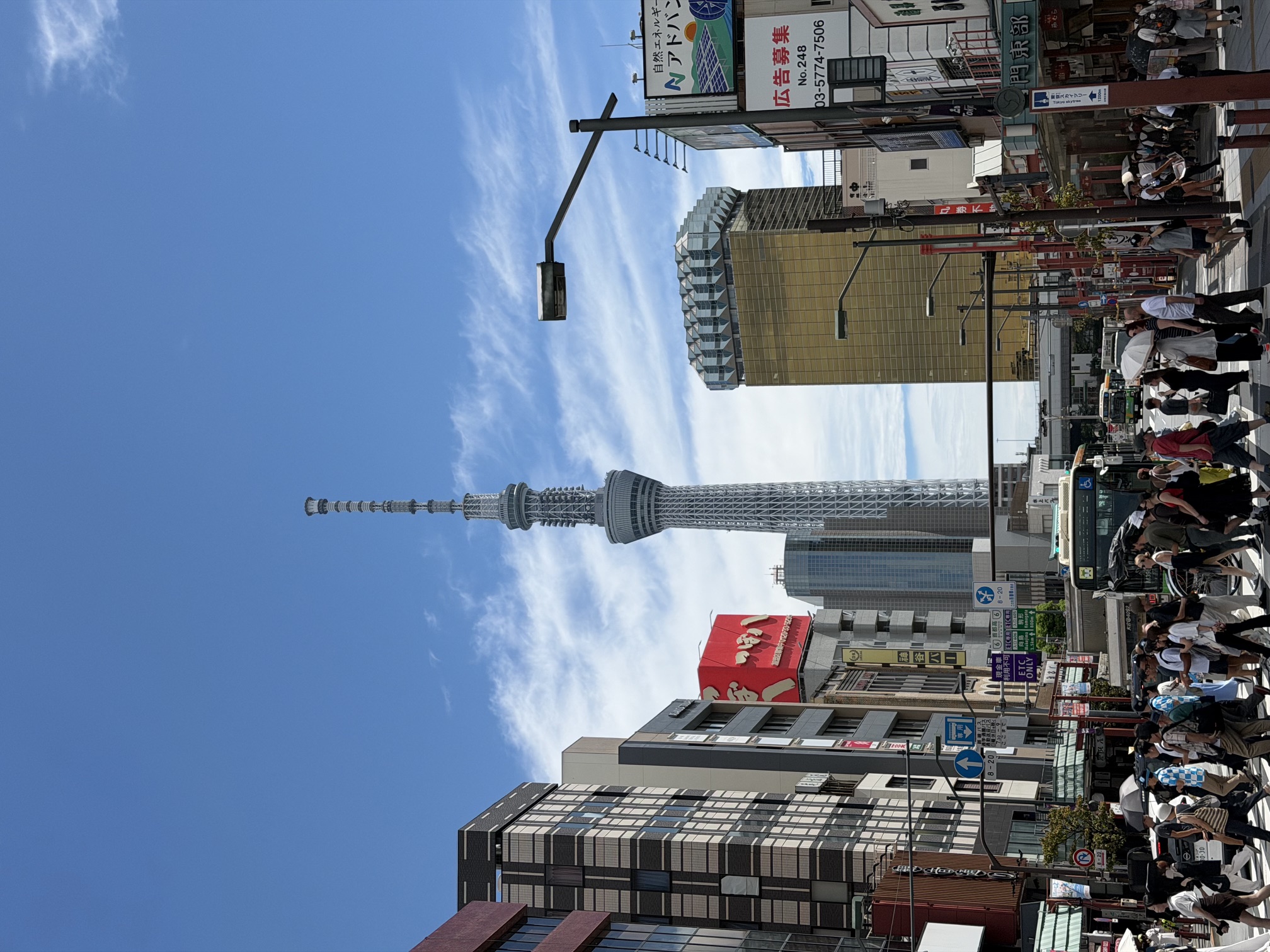
Day 2: explore Asakusa and Ueno
Start early at Kaminarimon and Senso-ji, then continue to Ueno for the park, museums or Ameyoko depending on your interests. These areas fit naturally on the eastern side of Tokyo and leave room for food and slower street exploration. Finish with one evening viewpoint or return to Asakusa after dark rather than crossing the city repeatedly for unrelated attractions.
Day 3: connect Harajuku, Shibuya and Shinjuku
Begin around Meiji Jingu and Harajuku, walk or ride toward Shibuya, then choose Shinjuku for the evening if you still have energy. This is a full western-Tokyo day, so select one observation deck, garden or museum rather than trying to complete every famous stop. Reserve any timed viewpoint in advance and leave unstructured time for shopping, cafés and station navigation.
Day 4: keep one Tokyo day flexible
Use the fourth day for the interest that matters most: another Tokyo neighborhood, a major museum, a theme park or a weather-dependent day trip. Keeping this day open prevents the entire itinerary from failing when rain, closures or fatigue change the plan. If you leave Tokyo, check the final return and avoid a distant excursion that compromises the next morning’s transfer.
Day 5: take the Shinkansen to Kyoto
Travel from Tokyo to Kyoto on the Tokaido Shinkansen after the morning rush or at the time that best fits your hotel check-in. Reserve an appropriate seat for oversized baggage when required, or send large luggage ahead and carry essentials. After arrival, choose a modest central activity such as Nishiki Market’s surrounding streets, the Kamo River or a neighborhood near the hotel instead of scheduling a distant temple circuit.
Day 6: focus on eastern Kyoto and Gion
Group Higashiyama sights into one continuous route, starting early at the place most important to you. Temples, preserved streets and slopes require more walking than a map suggests. Choose a manageable set, respect residential areas and finish toward Gion or the Kamo River. Avoid zigzagging across Kyoto for a second cluster simply because it appears on a checklist.
Day 7: choose western or southern Kyoto
Select one anchor: Arashiyama in western Kyoto or Fushimi Inari in the south, then pair it with something nearby or return for a slower central afternoon. Both become crowded, so an early start helps. This is also the easiest day to substitute a focused experience, garden or craft activity. Confirm the next day’s Osaka hotel, luggage plan and exact arrival station before bed.
Day 8: move to Osaka and enjoy the evening
Kyoto and Osaka are close, but checkout, station access and hotel check-in still consume time. Transfer without rushing, leave luggage and begin with one district such as the Osaka Castle area, Umeda or Tennoji. Save Namba and Dotonbori for the evening if food and nightlife are priorities. Check the exact railway and station because “Osaka,” “Umeda,” “Namba” and “Shin-Osaka” are not interchangeable names.
Day 9: give Osaka a full local day
Build the day around food and neighborhoods rather than treating Osaka as a short photo stop. A market visit, museum, shopping street, Shinsekai, bay attraction or northern district can work, but combine places geographically. If Universal Studios Japan is the priority, give it the whole day and book according to its current system instead of adding central-Osaka sightseeing around it.
Day 10: protect the departure
Match the final morning to the flight time and airport. For an early Kansai departure, stay on a route that makes the airport transfer simple and avoid a last-minute attraction. For a later flight, choose one short activity near the hotel, collect stored luggage and leave a generous buffer. If the international flight departs from Tokyo instead, return to Tokyo on Day 9 and sleep near a practical airport connection.
Route at a glance
Your 10-day Japan itinerary
| Day | Base | Main plan | Sleep |
|---|---|---|---|
| 1 | Tokyo | Arrival and one easy neighborhood | Tokyo |
| 2 | Tokyo | Asakusa, Ueno and an evening view | Tokyo |
| 3 | Tokyo | Meiji Jingu, Harajuku, Shibuya and Shinjuku | Tokyo |
| 4 | Tokyo | Flexible neighborhood, museum or day trip | Tokyo |
| 5 | Kyoto | Shinkansen and a gentle central-Kyoto afternoon | Kyoto |
| 6 | Kyoto | Higashiyama, temples and Gion | Kyoto |
| 7 | Kyoto | Arashiyama or Fushimi Inari plus a slower district | Kyoto |
| 8 | Osaka | Transfer, Osaka Castle area and Namba evening | Osaka |
| 9 | Osaka | Market, neighborhood time and food-focused evening | Osaka |
| 10 | Osaka | Departure day or one short local activity | — |
Book the trip in the right order
Fix the airports
Tokyo arrival and Kansai departure reduce backtracking. If the fare is much higher, compare it with the cost and time of returning to Tokyo.
Choose three bases
Book one Tokyo, one Kyoto and one Osaka hotel. Avoid changing hotels inside each city unless it removes a specific airport or attraction problem.
Add fixed reservations
Reserve the long-distance train, limited-entry attractions and restaurants only after the overnight plan is stable.
Adapt the route
Change the plan without rebuilding it
Round-trip Tokyo flight: return to Tokyo on Day 9 and sleep near a practical airport route. Keep Day 10 for departure. Do not depend on a long Osaka-to-Tokyo transfer immediately before an international flight.
Kansai arrival: reverse the itinerary—Osaka, Kyoto, then Tokyo—rather than crossing the same corridor twice.
More nature or a ryokan: replace flexible Day 4 or one Osaka night with an overnight stay. Protect the accommodation’s check-in and dinner schedule.
Transport and luggage
Prepare the two transfer days
- Compare individual tickets with any rail pass using your actual route
- Confirm Tokyo and Kyoto departure stations before booking accommodation
- Reserve the Shinkansen seat once the hotel dates are fixed
- Reserve an oversized-baggage seat when the suitcase dimensions require it
- Send large luggage ahead when useful and carry one night of essentials
- Allow time for station navigation instead of planning minute-perfect connections
- Keep tickets, hotel addresses and essential confirmations available offline
Choose each city base
Japan Finds may add clearly marked accommodation partner links after program approval. The route and area recommendations remain editorially independent.
Official information used for this guide
Transport information reviewed September 22, 2026. Confirm current schedules, ticket rules and attraction reservations before travel.
Opening hours, prices, reservation rules and transport details can change. Confirm important details with the official operator before your visit.