
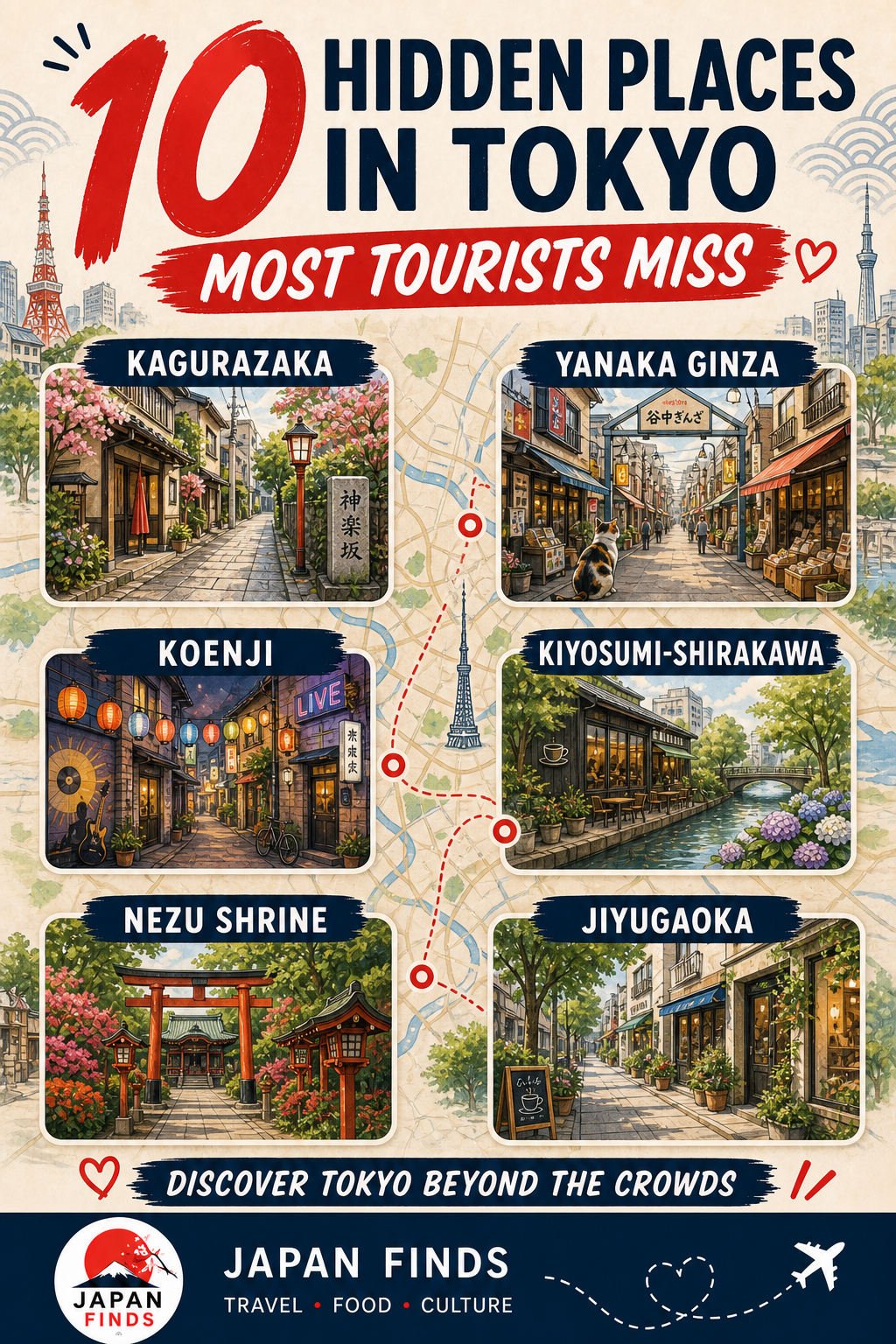
“Hidden” is relative in a city as well explored as Tokyo. The places below are not secret or guaranteed to be quiet, but they offer a different rhythm from the busiest parts of Shibuya, Shinjuku and Asakusa. Choose two or three that match your interests, visit at a considerate pace and treat residential streets as someone’s neighborhood rather than a photo set.
Kagurazaka: stone lanes and layered history
Once associated with geisha culture, Kagurazaka combines sloping lanes, shrines, small restaurants and a noticeable French influence. Start near Iidabashi Station, follow the main slope, then turn into the narrower side streets without entering private property. It works best as a late-morning walk followed by lunch or an early evening meal.
Yanaka Ginza: an old-town shopping street
Yanaka Ginza is a compact neighborhood shopping street with small food shops and an everyday shitamachi atmosphere. Pair it with a walk through the wider Yanaka area and nearby cemetery paths rather than visiting only for a quick photo. Shops keep individual hours, so arrive after the morning commute but before the street begins winding down.
Koenji: vintage shops and live music
Koenji is one of western Tokyo’s strongest areas for secondhand clothing, music venues, covered shopping streets and informal bars. The neighborhood wakes up later than a temple district, making afternoon browsing and an evening meal a better fit than an early start. Check event dates because festivals can transform the streets and crowd levels.
Kiyosumi-Shirakawa: coffee, gardens and modern art
This eastern Tokyo neighborhood is known for specialty coffee, converted warehouses and easy access to Kiyosumi Gardens and contemporary art. Build a slow half-day around one cultural stop, a garden walk and a café rather than racing between shops. Confirm museum days and garden information before travel, as schedules and admission details can change.
Nezu Shrine: vermilion gates near old Tokyo streets
Nezu Shrine sits close to the Yanaka and Sendagi area and is known for its historic buildings, green grounds and rows of small vermilion torii. It can be combined with Yanaka, but deserves a separate pause rather than being treated as a backdrop. Spring azalea season is especially attractive and can also be busy, so a weekday morning is a sensible choice.
Jiyugaoka: cafés, sweets and leafy lanes
A few stops from Shibuya, Jiyugaoka feels more residential and leisurely, with narrow streets, bakeries, dessert cafés and independent fashion and interior shops. It suits travelers who want an unhurried afternoon rather than a landmark checklist. Wander on both sides of the station, stop for a sweet break and keep voices low on residential blocks.
Shibamata: a retro temple approach
Shibamata offers a traditional shopping approach leading to Taishakuten, along with the nearby Yamamoto-Tei residence and a nostalgic atmosphere associated with classic Japanese cinema. It is farther from the central loop, so allow a half-day and enjoy the journey rather than squeezing it between major bookings. Check each attraction’s current hours before setting out.
Daikanyama: design, books and a calmer Shibuya
Daikanyama is close to Shibuya but trades giant crossings for boutiques, bookstores, brunch spots and tree-lined streets. Combine it with nearby Ebisu or Nakameguro for a coherent walking day. The appeal is the neighborhood itself, so leave space to browse instead of building the visit around a single must-see landmark.
Monzen-nakacho: temples, lanes and local evenings
Monzen-nakacho brings together Fukagawa Fudodo, Tomioka Hachimangu, a lively temple approach and narrow drinking lanes. It is easy to reach from central Tokyo and works from late afternoon into evening. Religious sites require respectful behavior, while the smallest bars may have limited seats or little English; observe the room and follow the staff’s lead.
Nishi-Ogikubo: antiques and backstreet cafés
Nishi-Ogikubo, often shortened to Nishiogi, is known for antique shops, secondhand bookshops, traditional coffee shops and relaxed backstreets. Many independent businesses open late or close on different days, so check a few priority stops and keep the rest of the walk flexible. It pairs well with another stop on the JR Chuo Line without demanding a full sightseeing day.
Opening hours, prices, reservation rules and transport details can change. Confirm important details with the official operator before your visit.