
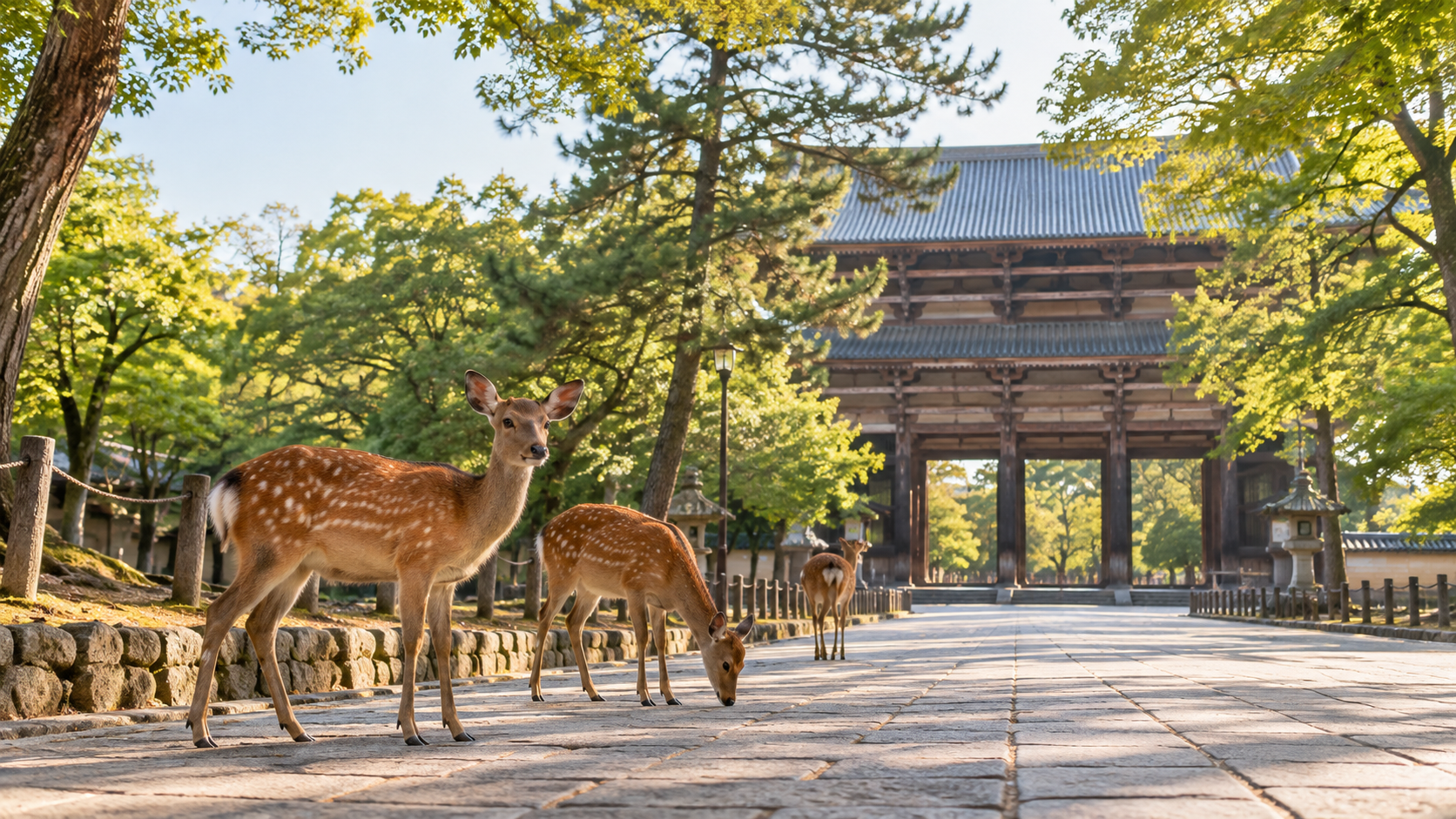
Nara looks compact on a map, but its famous temples, shrine approaches, gardens, old streets and hills reward a slower pace. The best first visit is built around Nara Park and the Todaiji–Kasuga Taisha corridor, with one deliberate choice between Isuien, Naramachi and Mount Wakakusa. This guide explains the seven places featured in our Nara day-trip Pin, then turns them into a route that works from Kyoto or Osaka. It also reflects a major current change: Kofukuji’s five-story pagoda is enclosed for conservation work, so the classic open view shown in older travel images is not currently available.
Nara Park: meet the deer without treating them like pets
Nara Park links many of the city’s major sights across a large open landscape. Its free-roaming sika deer are wild animals and a symbol of Nara, not a petting-zoo attraction. Feed only official shika senbei crackers, keep paper and plastic secured, show empty hands when the food is gone and never tease, corner or ride a deer. Use the park as the connective tissue of the day rather than one separate photo stop.
Todaiji Temple: give the Great Buddha the largest time block
Todaiji is the essential first-visit temple. Approach through the monumental Nandaimon Gate, then enter the Great Buddha Hall to see the approximately 15-meter bronze Buddha. The precinct is much larger than the main hall, so leave room for walking, crowds and optional hillside buildings such as Nigatsudo. Check current admission hours and interior photography signs before your visit.
Kasuga Taisha: follow the lantern-lined forest approach
Kasuga Taisha sits within the wooded eastern side of the park and is known for its stone and bronze lanterns. The approach is part of the experience, but the distance from Todaiji is longer than it appears on a simple attraction list. Keep voices low, do not block worshippers and follow current photography restrictions in the inner areas. Ceremonies can also affect access.
Kofukuji Temple: visit for the history, not the old pagoda view
Kofukuji is an easy first or final stop near Kintetsu Nara Station, with important temple buildings and the National Treasure Hall. Its famous five-story pagoda, however, has been enclosed by a large temporary structure for major conservation work. The official project now lists construction through March 2034. Do not build your visit around recreating the unobstructed pagoda photographs found in older guides.
Isuien Garden: choose it for a quieter landscape break
Isuien is a carefully composed Japanese garden between central Nara and the Todaiji area. It suits travelers who want seasonal scenery and a calmer hour away from the busiest deer routes. Opening days and admission can change, so check the garden directly. On a one-day trip, choose Isuien or a longer Naramachi visit rather than squeezing both into a rushed afternoon.
Naramachi: slow down in Nara’s former merchant district
South of the central sights, Naramachi preserves the scale and atmosphere of an old merchant neighborhood. Traditional machiya buildings now hold small shops, cafés and museums, while Gangoji adds major temple history. It works best after lunch or as an alternative to the eastern hill, especially for travelers who prefer streets, crafts and food to another long temple walk.
Mount Wakakusa: add the view only when the season and daylight work
Mount Wakakusa rises behind the eastern temple area and offers a broad view over Nara. The paid walking trails are seasonal and normally close in winter; the official tourism site describes about 15 minutes to the midway point and another 20 minutes to the summit under suitable conditions. Treat the mountain as an optional final stop, confirm current access and weather, and skip it when the core route has already filled the day.
Choose the pace first
Which Nara day fits your travel style?
Follow the main park corridor and use the remaining time for Kofukuji. This is the best first visit when Nara’s sacred sites are the priority.
Choose one quiet garden or old-town block rather than another long walk. This plan leaves more time for lunch, cafés and details.
Use this only when the trail is open, the weather is suitable and you have enough daylight. Remove Isuien and Naramachi from the same-day plan.
First-trip rule: Nara Park alone can fill a day. The seven places in this guide are options for building a route, not a requirement to rush through every entrance.
A route without backtracking
A realistic one-day Nara route
- 1Arrive at Kintetsu Nara and begin with Kofukuji
The temple is close to the station and works as a short orientation stop. Remember that the five-story pagoda is currently enclosed for conservation work.
- 2Walk through the park to Todaiji
Meet the deer calmly along the way, then give Nandaimon and the Great Buddha Hall the day’s largest sightseeing block.
- 3Take a real lunch break
Eat before the long eastern section. Restaurant queues can be part of the schedule, especially on weekends and holidays.
- 4Continue through the forest to Kasuga Taisha
Allow time for the lantern-lined approach, worship and the return walk. Do not underestimate the distance because the entire area is labeled “Nara Park.”
- 5Choose one final block
Pick Isuien for a garden, Naramachi for old streets and cafés, or Mount Wakakusa for a seasonal view. One well-chosen finish is better than three rushed stops.
How much can you comfortably fit?
| Time in Nara | Recommended focus | What to leave for another visit |
|---|---|---|
| Half day | Kofukuji exterior, Nara Park and Todaiji | Kasuga Taisha, Naramachi, Isuien and the mountain |
| Full day | Kofukuji, Todaiji, park and Kasuga Taisha, plus one final block | The other two optional blocks |
| One night | Core sights on day one; garden, old town or mountain on day two | Very little, with far less rushing |
Getting there
From Kyoto or Osaka: choose the station that fits the route
Kintetsu services connect Kyoto and Kintetsu Nara, while JR connects Kyoto and JR Nara. Journey times vary by service and transfer; allow roughly 35–50 minutes before local walking.
Kintetsu connects Osaka-Namba and Kintetsu Nara, while JR provides useful options from stations such as Tennoji and Osaka. Compare the route from your actual hotel rather than the city name alone.
This station is generally the more convenient starting point for Kofukuji, Nara Park and the classic east-side route. It reduces the first walk for most one-day visitors.
Regular Kintetsu trains require the base fare; a limited-express service also requires a separate limited-express ticket. Major transport IC cards can be used on regular covered journeys, but confirm the exact service.
Do not board a reserved limited-express train with only an IC-card tap. Check whether the train requires the additional limited-express ticket before departure.
Five rules for meeting Nara’s deer safely
- Remember they are wild animals. Antlers, hooves and sudden movement can injure visitors.
- Feed only official shika senbei. Do not offer your lunch, packaging or paper.
- Show empty hands when the crackers are gone. Never tease a deer by holding food out and pulling it away.
- Keep maps, tickets and plastic secured. Deer may grab items that smell like food.
- Give children space and follow current signs. Do not corner, touch from behind or stand between animals.
Seasonal planning and a major current change
Comfortable walking weather also brings crowds. Arrive early and preselect the one optional afternoon block.
Heat and humidity make the park distances feel longer. Carry water, use shade and remove the mountain if conditions are uncomfortable.
Short daylight changes the order, and Mount Wakakusa’s paid walking trails normally close for winter. Confirm the current opening period.
The five-story pagoda is surrounded by a roughly 60-meter temporary structure. The official project lists work through March 2034, so the classic exterior view is unavailable.
What to eat during a Nara day trip
Pressed sushi wrapped in persimmon leaves is a practical regional meal. The leaf is wrapping, not part of the sushi.
Fine noodles associated with nearby Miwa suit a lighter lunch, served chilled or warm depending on the shop and season.
Vegetables aged in sake lees have a strong, distinctive flavor and are commonly sold as a local specialty.
Naramachi and the central area are good places for a slower café break after the main temple walk.
Stay overnight if you want more than the famous loop
A day trip is enough for the core park corridor. Stay one night when you want early-morning quiet, Isuien and Naramachi without choosing between them, a relaxed Mount Wakakusa visit, or a second day beyond central Nara. The official tourism guide recommends more time for the wider prefecture, including areas such as Horyuji, Asuka and Yoshino.
Official sources
Information reviewed October 10, 2026. Opening periods, admissions, transport and conservation schedules can change; confirm the official source for your date.
- Visit Nara: Nara Park
- Visit Nara: First-time visitor guide
- Visit Nara: Deer guidance and things to do
- Todaiji: Visiting hours and admission
- Kasuga Taisha: Basic visitor information
- Kofukuji: Five-story pagoda conservation project
- Visit Nara: Naramachi
- Visit Nara: Mount Wakakusa
- Kintetsu Railway: Tickets and IC cards
- Kintetsu Railway: Kyoto, Osaka and Nara route information
Opening hours, prices, reservation rules and transport details can change. Confirm important details with the official operator before your visit.