
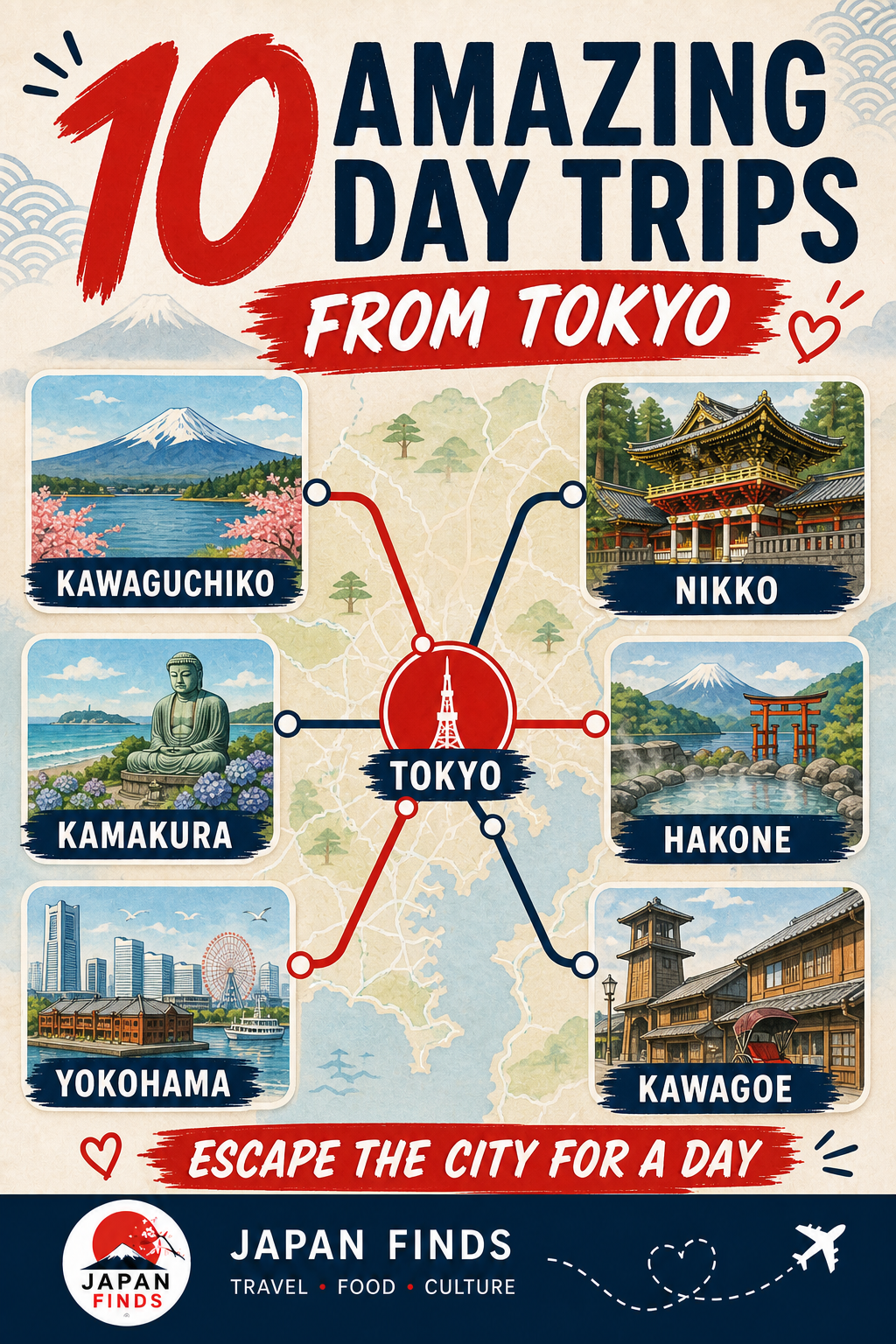
Tokyo makes an excellent base for exploring the wider Kanto region and nearby Yamanashi. The best day trip is not simply the most famous one: it is the place that matches the weather, your starting station and how much transport you want in one day. The travel times below are planning estimates from central Tokyo and can change by route, connection and season, so confirm the current timetable before departure.
Kawaguchiko: choose it for Mount Fuji views
Lake Kawaguchi is one of the most approachable bases in the Fuji Five Lakes area, with lakeside scenery, museums and viewpoints. A clear forecast matters more than a rigid itinerary because Mount Fuji can disappear behind cloud even on otherwise pleasant days. Reserve popular highway buses or limited-express trains when possible, start early and choose two or three local stops rather than trying to circle every lake.
Nikko: focus on the World Heritage area
Nikko rewards travelers interested in ornate shrines, Buddhist temples and mountain history. For a day trip, keep the plan around Shinkyo Bridge and the World Heritage complexes instead of adding Lake Chuzenji, waterfalls and Kinugawa Onsen to the same day. Direct limited-express services from Asakusa or Shinjuku take roughly two hours, so an early reserved departure protects your sightseeing time.
Kamakura: temples, the Great Buddha and the coast
Kamakura is less than an hour from Tokyo Station by direct JR train and works well for a first day trip. Build the day around one geographic line: Kita-Kamakura temples to central Kamakura, or Hase and the Great Buddha followed by the coast. Komachi-dori is convenient for food and shopping, but the city has enough temples and walking paths that trying to see everything creates unnecessary backtracking.
Hakone: hot springs, art and volcanic landscapes
Hakone-Yumoto is about 90 minutes from Shinjuku on the fastest direct services, but the sights spread across a mountain transport network. Choose either a classic loop, an art-focused day or a slower onsen visit. Weather and transport conditions can affect ropeways, boats and views of Mount Fuji, so check operations that morning and avoid attaching a fixed evening reservation in Tokyo to an ambitious circuit.
Yokohama: the easiest city escape
Yokohama is the most flexible option on this list, with frequent trains reaching the city in under an hour from many parts of Tokyo. A practical route connects Minato Mirai, the waterfront and Chinatown, while Sankeien Garden requires additional travel. Stay into the evening if you want the harbor lights; the short return journey makes Yokohama a good choice when the weather is uncertain or you prefer a later start.
Kawagoe: Edo-period streets close to Tokyo
Known as Little Edo, Kawagoe combines warehouse architecture, the Toki no Kane bell tower, temples and Kashiya Yokocho candy alley. Express trains can reach the city from major Tokyo stations in under an hour, though the historic center is not directly outside every station. Start with the warehouse district, add one temple and leave time for snacks instead of treating every preserved street as a separate stop.
Mount Takao: an accessible hiking day
Mount Takao is roughly an hour from Shinjuku and offers several trails, Yakuoin Temple and wide views on clear days. Trail difficulty and conditions vary, while a cable car and chairlift can shorten part of the climb. Wear proper footwear, check the weather and sunset time, and expect weekends and autumn foliage periods to be busy. The mountain remains within Tokyo, but it feels distinctly removed from the city center.
Enoshima: island walks and coastal sunset
Enoshima combines shrine paths, sea views, caves, cafés and the Sea Candle observation tower on a compact island linked to the mainland by bridge. It can be paired with a selective Kamakura morning, but both destinations easily fill a day on their own. Allow for stairs and slopes, confirm cave access and closing times, and time the return around sunset if the forecast is clear.
Chichibu: seasonal nature and mountain culture
Chichibu is around 90 minutes from Ikebukuro by the fastest direct limited-express option. The wider region includes shrines, flower fields, river scenery and hiking, but many attractions are spread beyond central Chichibu. Choose one seasonal focus and check onward buses or local trains before leaving Tokyo. A limited day plan works best when it avoids combining distant mountain sites.
Sawara: canals and merchant-town history
Sawara in Chiba preserves merchant houses, warehouses and canals from its history as a prosperous trading town. Highway buses from Tokyo can take about 90 minutes, while rail journeys normally require a transfer. The historic district is suited to a slow walk, local food and a boat ride when operating. Festival and iris seasons add atmosphere but also change crowds and transport demand.
At a glance
Compare 10 day trips from Tokyo
| Destination | Best for | Typical access | Main planning risk |
|---|---|---|---|
| Kawaguchiko | Mount Fuji views | About 2 hours | Cloud and reserved transport |
| Nikko | World Heritage temples | About 2 hours | Trying to add distant mountain sights |
| Kamakura | Temples and coast | About 55 minutes | Too many scattered stops |
| Hakone | Onsen, art and scenery | About 90 minutes to Hakone-Yumoto | Weather and transport disruptions |
| Yokohama | Waterfront and food | About 30–50 minutes | Underestimating distances within the city |
| Kawagoe | Historic streets | Under 1 hour | Station-to-old-town transfer |
| Mount Takao | Accessible hiking | About 1 hour | Trail conditions and seasonal crowds |
| Enoshima | Island and sunset | About 70–90 minutes | Stairs and closing times |
| Chichibu | Seasonal nature | About 90 minutes | Infrequent onward transport |
| Sawara | Canals and merchant history | About 90 minutes by bus | Event crowds and return schedule |
Times are approximate one-way planning estimates from a useful central-Tokyo departure point. They do not include hotel-to-station travel, waiting, transfers or local sightseeing transport.
Choose the day trip that matches your priority
Kawaguchiko
Choose it when the forecast is clear and Mount Fuji is the reason for the trip.
Nikko or Kamakura
Pick Nikko for grand World Heritage architecture; Kamakura for a flexible temple-and-coast day.
Hakone
Best when an onsen, art museum or scenic transport loop matters more than speed.
Yokohama or Kawagoe
Both work well without a dawn departure and offer frequent transport from Tokyo.
Mount Takao or Chichibu
Choose Takao for the simplest hike; Chichibu for a more seasonal, spread-out nature day.
Enoshima or Sawara
Choose Enoshima for sea views and sunset, or Sawara for canals and old merchant streets.
The night before
Confirm the details that can change the day
- Weather, visibility and any wind or heavy-rain warnings
- The exact departure station, platform and last practical return
- Whether the fastest train or highway bus requires a reservation
- Local buses, ropeways, boats and museum closure days
- Comfortable shoes, a charged phone and an offline route
- A shorter backup plan if transport or visibility deteriorates
Choose a useful Tokyo base
Your hotel location changes the easiest day trip
Shinjuku is convenient for Hakone, Kawaguchiko and Mount Takao. Asakusa suits Tobu services toward Nikko, while Tokyo and Ueno support many JR departures. Ikebukuro works especially well for Kawagoe and Chichibu. Check the first useful departure from your actual hotel before booking a non-refundable ticket.
Compare Tokyo hotel areasJapan Finds may add clearly marked accommodation partner links after program approval. Destination selection and planning advice remain editorially independent.
Official information used for this guide
Destination and access information reviewed September 22, 2026. Confirm current timetables, reservations, closures and weather before travel.
Opening hours, prices, reservation rules and transport details can change. Confirm important details with the official operator before your visit.