
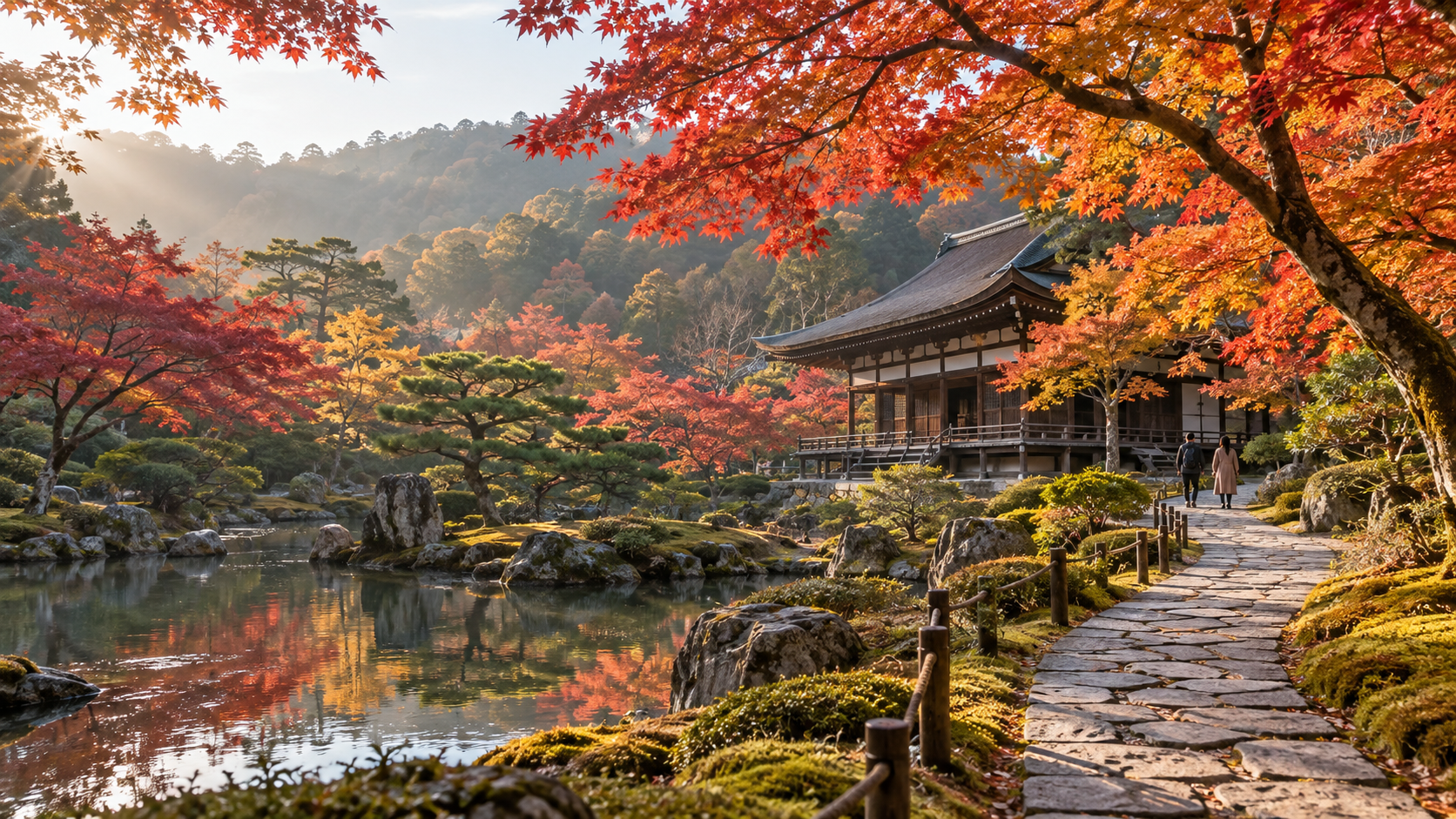
Kyoto’s autumn color is spectacular, but a list of famous temples is not yet an itinerary. The city’s best-known foliage sites sit in different rail corridors and neighborhoods, while peak-season buses, temple entrances and narrow streets can become crowded. A better plan chooses one area for the day, starts with the place that matters most and treats any evening illumination as a separate reservation or timing decision. This guide covers ten strong foliage locations, then organizes them into three practical one-day routes. Color timing changes every year, so use the official Kyoto Autumn Leaves Calendar once its 2026 updates begin on October 30 rather than planning around a guaranteed peak date.
Tofukuji: make the Tsutenkyo view your first stop
Tofukuji is one of Kyoto’s most famous autumn sites, especially for the maple-filled valley seen from the Tsutenkyo Bridge. It belongs at the beginning of a southern-Kyoto day because crowds build quickly and the temple is easy to reach by rail from Kyoto Station. Follow current photography and one-way walking instructions, which can change during the busiest foliage period, and allow more time than a normal temple visit.
Kiyomizudera: combine city views with Higashiyama color
Kiyomizudera’s hillside setting gives broad views over Kyoto and autumn trees around its wooden stage and temple grounds. The approach through Higashiyama is part of the experience but becomes extremely busy, so arrive early or choose a clearly planned evening visit. Walk from a rail station when practical, keep residential lanes clear and do not expect a bus from Kyoto Station to be the fastest option in peak traffic.
Kodaiji: use it as a calmer transition into the evening
Kodaiji sits between the Kiyomizudera area and Gion, making it a useful late-afternoon or evening anchor. Its gardens, bamboo and seasonal night viewing create a different atmosphere from the larger daytime temples. Check the official 2026 illumination dates and last admission before visiting; a night opening should complement a nearby route rather than justify crossing the city after a full day elsewhere.
Nanzenji: begin an eastern Kyoto walking route
Nanzenji combines broad temple grounds, sub-temples and the brick Suirokaku aqueduct beneath autumn trees. It works well as the starting point for a walking route toward Eikando and the Philosopher’s Path area. The grounds contain active religious spaces as well as popular photo locations, so keep entrances and paths open and check separate admission details for sub-temples or gardens.
Eikando: prioritize it when intense maple color matters
Eikando is renowned for dense maple foliage around its halls, pond and hillside paths. It is close enough to Nanzenji to pair on foot, but peak-season queues and the size of the precinct mean the two stops can consume most of a morning. Daytime and evening admissions may operate under different conditions; verify the current schedule and decide which experience you want before building the rest of the route.
Shinnyodo: add a quieter temple without leaving eastern Kyoto
Shinnyodo offers temple buildings, a three-story pagoda and autumn foliage in a more residential setting north of Eikando. It is not empty during peak color, but it can feel less compressed than the most famous headline sites. Approach quietly through neighborhood streets, avoid private property and choose Shinnyodo instead of adding another distant district to the same day.
Arashiyama: move beyond the bridge and bamboo grove
Autumn in Arashiyama extends from the Katsura River and Togetsukyo Bridge into temple gardens and the Saga foothills. The central bridge and bamboo grove become crowded early, so arrive by rail, choose one priority temple and continue north rather than circling the busiest core. The district deserves a full western-Kyoto day; combining it with eastern Kyoto usually wastes the best hours in transit.
Jojakkoji: climb through maple-covered temple grounds
Jojakkoji sits on the slope above Saga and is known for stone steps, moss and layered autumn foliage. It pairs naturally with the quieter northern side of Arashiyama after an early start near the river. Expect uneven ground and climbing, wear shoes with grip and leave room for queues on narrow approaches. Do not rush onward merely to collect another temple name.
Daikakuji: choose space, pond views and a slower finish
Daikakuji lies northeast of central Arashiyama and offers a spacious temple complex beside Osawa Pond. It can provide a calmer late-afternoon finish after the busiest Saga sights, although special seasonal events can increase demand. Check current opening areas and event arrangements, then use a bus, taxi or a deliberate walk rather than assuming every Arashiyama attraction is adjacent.
Takao and Jingoji: consider the earlier mountain color
The Takao area in northwestern Kyoto is known for mountain scenery and temples including Jingoji. Its higher elevation often means color begins earlier than in central Kyoto, but the journey and steep temple approaches require more planning. Treat Takao as its own half-day or full-day excursion, check current bus schedules and trail conditions, and avoid attaching it to a packed Arashiyama checklist.
One area per day
Choose the Kyoto autumn route that fits you
Nanzenji → Eikando → Shinnyodo, with one optional night opening nearby.
Tofukuji early → Kiyomizudera → Kodaiji or Gion in the evening.
Arashiyama early → Jojakkoji → Daikakuji, using rail for the main approach.
Do not try all three: crossing Kyoto between foliage districts during peak hours removes the quiet morning that makes each route worthwhile.
Three realistic day plans
Group nearby places instead of chasing a top-ten list
Eastern Kyoto on foot
- Start at Nanzenji near opening time.
- Walk to Eikando and give it the largest time block.
- Continue north toward the Philosopher’s Path area.
- Choose Shinnyodo or a café break, then finish.
- Add one nearby illumination only after checking admission and closing times.
Tofukuji and Higashiyama
- Take the JR Nara Line or Keihan corridor to Tofukuji early.
- After the temple, use rail toward eastern Kyoto rather than returning to the Kyoto Station bus queue.
- Walk the Kiyomizudera approach at a measured pace.
- Continue downhill through Higashiyama.
- Finish at Kodaiji, Gion or dinner—do not add Arashiyama.
Saga and Arashiyama
- Arrive by JR, Hankyu or Randen according to your starting point.
- See the river area or one priority temple before the largest crowds.
- Move north toward Jojakkoji and the quieter Saga streets.
- Choose Daikakuji for a spacious afternoon finish.
- Return by rail and keep the evening close to your hotel.
Timing changes every year
Use the foliage calendar, not a guaranteed “peak week”
Plan the route, book accommodation and save alternatives. Mountain areas such as Takao may change earlier than central Kyoto.
Check Kyoto City’s official Autumn Leaves Calendar, which is scheduled to begin its 2026 updates on this date.
Compare color stage, weather and crowd information each morning. Switch areas when another part of the city is showing better color.
How to use a night illumination well
- Pick one event near the daytime route. Night viewing should reduce travel, not create another cross-city transfer.
- Check the 2026 official list. Dates, hours, separate admission, reservations and last entry differ by venue.
- Expect a queue. “Night opening” does not mean quiet; arrive with warm layers and a realistic dinner plan.
- Protect tomorrow morning. A late finish is a poor trade if it prevents the early start needed at the next day’s priority site.
Avoid the Kyoto Station bus trap
Use rail for the long part of the journey
Use JR or Keihan according to your starting point.
Use the Tozai Subway Line or Keihan, then walk or take a short bus connection.
Compare JR, Hankyu and Randen with your hotel location and first stop.
Check the current bus timetable and return margin before leaving central Kyoto.
Kyoto’s official guidance recommends combining trains and buses because road congestion can make a seemingly direct bus much slower. Travel without large luggage and use the city’s congestion forecast or live cameras when available.
Build one backup into every autumn day
- Leaves are still green: prioritize gardens, architecture and neighborhoods rather than racing to another district.
- Heavy rain: shorten outdoor walks, choose one temple with substantial indoor viewing and protect shoes and camera gear.
- Extreme crowds: remove a stop, eat outside the famous approach streets and use a quieter nearby temple such as Shinnyodo.
- Color has passed: check lower-elevation or later-changing locations on the official calendar instead of relying on last year’s dates.
Autumn etiquette in temple districts
- Follow all photography restrictions, especially inside halls and during crowded one-way routes.
- Do not stop on bridges, stairs or narrow residential lanes for extended photo sessions.
- Never enter private gardens, doorways or property for a better angle.
- Keep voices low near homes and active worship spaces, and carry your rubbish until you find the correct bin.
- Avoid bringing large suitcases onto packed local transport; store or forward them before sightseeing.
Official sources
Information reviewed October 15, 2026. Foliage, special openings, illumination dates, admissions and transport operations can change. Confirm the day’s conditions before travel.
- Kyoto City Official Travel Guide: helpful tips for autumn 2026
- Kyoto City Official Travel Guide: Autumn Leaves Calendar
- Kyoto City Official Travel Guide: 2026 autumn illumination events
- Kyoto City Official Travel Guide: getting around Kyoto
- Kyoto City Official Travel Guide: maps, congestion forecast and live tools
- Kyoto Online Tourist Information Center: famous autumn foliage places
Opening hours, prices, reservation rules and transport details can change. Confirm important details with the official operator before your visit.