
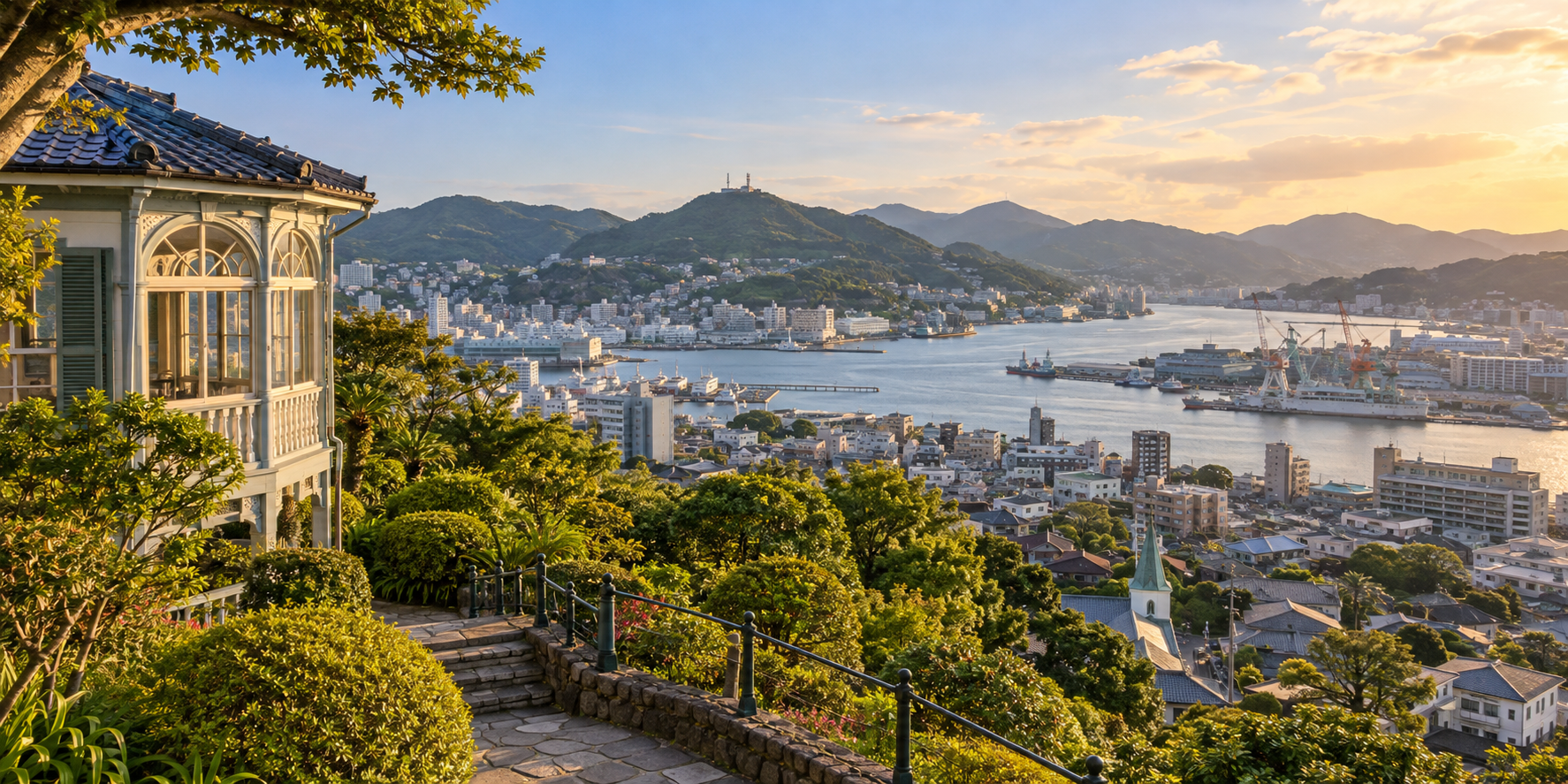
Nagasaki’s story cannot be reduced to one period. The city asks visitors to confront the atomic bombing and its continuing call for peace, while also revealing centuries of exchange with China and Europe, Hidden Christian history, hillside foreign residences, working harbor views and distinct regional food. Its attractions are connected by trams, but steep slopes and emotionally demanding museums make a hurried checklist a poor plan. Use these ten places to understand the city, then choose the one-day or two-day route that gives each part enough time.
Peace Park: begin with remembrance rather than a photo stop
Nagasaki Peace Park was created as a place to pray for the victims of the atomic bombing and for lasting world peace. The Peace Statue, Fountain of Peace and international monuments carry meanings that deserve time and quiet attention. Pair the park with nearby Hypocenter Park and the Atomic Bomb Museum, but do not treat them as interchangeable stops. August 9 is the anniversary of the bombing and the date of the annual peace ceremony.
Nagasaki Atomic Bomb Museum: leave time to absorb the record
The museum documents the atomic bombing of Nagasaki at 11:02 a.m. on August 9, 1945, the events leading to it, its human consequences, reconstruction and the continuing issue of nuclear weapons. The visit can be emotionally heavy. Read at your own pace, avoid loud conversation and give yourself a transition afterward instead of scheduling an immediate race across the city.
Dejima: understand Nagasaki as a gateway for trade and knowledge
Dejima was an artificial island and the Dutch trading post through which goods, information and scientific knowledge moved during much of Japan’s period of national seclusion. Reconstructed rooms and exhibits explain both commerce and daily life. Modern land reclamation means the site no longer appears isolated by water, so use the models and historical street plan to understand its original relationship with the city and harbor.
Glover Garden: connect foreign settlement history with harbor views
Glover Garden gathers historic Western-style buildings on a steep Minamiyamate hillside overlooking Nagasaki Port. The Former Glover House is a component of the UNESCO-listed Sites of Japan’s Meiji Industrial Revolution. Take time to distinguish original-location buildings from structures moved to the garden, and use the elevated paths and official route information to reduce unnecessary climbing.
Oura Cathedral: learn why the “Discovery of Hidden Christians” matters
Oura Cathedral stands in the former foreign settlement and is a component of the UNESCO-listed Hidden Christian Sites in the Nagasaki Region. In 1865, Hidden Christians from Urakami revealed their faith there after more than two centuries of prohibition. It remains a religious site, so dress and behave respectfully, follow photography rules and do not confuse its historical importance with an ordinary decorative church visit.
Mount Inasa: finish with the city’s harbor geography
The summit of Mount Inasa gives a broad view of the long harbor and neighborhoods climbing the surrounding hills. Night is popular, but visibility, weather, transport queues and service changes determine whether the trip is worthwhile. Check the official ropeway, slope-car and bus information on the day, keep a return plan and choose an alternative waterfront evening when clouds or strong wind obscure the view.
Nagasaki Shinchi Chinatown: use lunch to explore Chinese influence
Shinchi Chinatown is compact and works naturally between central attractions. It is a practical place to try Nagasaki champon, sara udon or a kakuni-filled bun, though good versions also exist elsewhere in the city. Avoid treating the district only as a food backdrop: Nagasaki’s long relationship with Chinese merchants, communities and temples is part of the city’s larger exchange history.
Megane Bridge: see how the river tied the temple district to trade
Megane Bridge was built in 1634 and is known for the spectacle-like circles created when its two stone arches reflect in calm water. The bridge sits along the Nakashima River near the Teramachi temple district, making it easy to pair with a central walk. River conditions affect the famous reflection; enjoy the structure and surrounding bridges even when wind, rain or water level prevents the perfect photograph.
Suwa Shrine: climb into Nagasaki’s Shinto and festival history
Suwa Shrine is closely connected with Nagasaki Kunchi, the city’s major autumn festival. Reaching the main precinct involves a prominent staircase, although travelers should check accessible approaches if needed. Because the shrine lies north-east of the most common waterfront route, include it on a two-day visit or choose it instead of another central stop rather than zigzagging across the city.
Sofukuji Temple: end with Nagasaki’s Chinese Buddhist heritage
Sofukuji was founded for Nagasaki’s Chinese community and is one of the temples that show how Chinese architecture and religious life shaped the city. Its vivid gate and temple buildings differ from the Western-influenced Minamiyamate area and the Shinto atmosphere of Suwa Shrine. Observe temple etiquette, check current access information and combine it with Teramachi or central Nagasaki rather than assuming every religious site is adjacent.
Choose the pace first
One day or two days in Nagasaki?
Give the peace sites a dedicated morning, choose one central-history stop, then pair Oura Cathedral with Glover Garden. Add Mount Inasa only when the weather and return transport work.
Use day one for remembrance and central trade history. Use day two for Chinese and Christian heritage, the southern hillside and an evening view.
Do not turn the Peace Park and Atomic Bomb Museum into quick boxes. They need emotional and practical space. If the museum visit runs long, remove another attraction rather than cutting remembrance time.
Map the stories
Group the ten sights before building the route
| Area and story | Main sights | Planning note |
|---|---|---|
| Peace and remembrance | Peace Park, Hypocenter Park and Atomic Bomb Museum | Keep these together and allow a quiet break afterward. |
| Central exchange history | Dejima, Shinchi Chinatown and Megane Bridge | Choose Dejima plus one short walk when time is limited. |
| Southern foreign settlement | Oura Cathedral and Glover Garden | Both involve slopes; use the most efficient entrance and exit for your mobility. |
| Religious diversity | Suwa Shrine and Sofukuji Temple | Best on a second day or as alternatives to other central stops. |
| Harbor panorama | Mount Inasa | Treat it as a weather-dependent evening plan, not a guaranteed finale. |
Focused first visit
A realistic one-day Nagasaki route
- 1Morning: Atomic Bomb Museum and peace area
Begin at the museum, then continue to Hypocenter Park and Peace Park. Reverse the order only if current opening times or crowds make that more sensible.
- 2Lunch: travel toward central Nagasaki
Use the tram journey as a transition. Choose champon or sara udon near Chinatown or another convenient stop.
- 3Early afternoon: choose Dejima or Megane Bridge
Dejima needs more exhibition time; Megane Bridge is the shorter outdoor option. Trying to do both can squeeze the southern sites.
- 4Late afternoon: Oura Cathedral and Glover Garden
These neighboring hillside attractions belong together. Confirm final admission times before climbing toward them.
- 5Evening: Mount Inasa only if conditions cooperate
Check visibility, wind, queues and the latest ropeway, slope-car or bus service. Keep a waterfront or Chinatown evening as the fallback.
Recommended pace
A two-day route with room to understand Nagasaki
- Atomic Bomb Museum
- Hypocenter Park and Peace Park
- Dejima
- Shinchi Chinatown or the waterfront
- Suwa Shrine or Sofukuji Temple
- Megane Bridge and Teramachi
- Oura Cathedral and Glover Garden
- Mount Inasa when weather permits
The second day is intentionally flexible. Travelers focused on Hidden Christian history can spend more time around Oura and related museums; those interested in Chinese heritage can prioritize Sofukuji, Teramachi and Chinatown.
Move with the city
Use trams for distance and save energy for the slopes
As of the official July 2026 guide, three tram routes connect Nagasaki Station with the peace area, Dejima, Chinatown, Megane Bridge, Oura and other central sights. Check the current route map because services and stop names can change.
The official guide lists the tram day pass at ¥600 for adults and ¥300 for children at the time of review. It is sold at designated locations and by app, not on board. Compare it with the number of rides you will actually take.
Major transport IC cards are accepted according to the official guide. Follow the vehicle’s boarding and tapping instructions and keep another payment method available.
Glover Garden, Oura, Suwa Shrine and Mount Inasa involve slopes, stairs or transfers. Check elevator, slope-car and accessible-route information before the day rather than assuming the shortest map route is easiest.
Four Nagasaki foods to fit around the route
Noodles, vegetables and seafood or meat in a substantial soup. Ingredients vary, so ask about allergens and broth.
Noodles topped with a thick, ingredient-rich sauce. Shops may offer crisp thin noodles or a softer thicker style.
Nagasaki’s familiar sponge cake makes an easy café break or packaged souvenir; compare sizes before carrying it through a full sightseeing day.
Braised pork in a soft bun is a convenient snack, but treat it as one option within Nagasaki’s broader Chinese-influenced food culture.
Visit memorial and religious sites with care
- Keep voices low at the museum, hypocenter and Peace Park. Do not pose playfully with memorial objects or photograph grieving visitors.
- Read before photographing inside Oura Cathedral, temples and shrine buildings. A ticket does not automatically permit photography everywhere.
- Separate historical explanation from worship. Oura Cathedral, Suwa Shrine and Sofukuji remain religious places with their own rules.
- Do not flatten Nagasaki into a single tragedy or a decorative “East meets West” theme. The city’s histories of war, trade, migration, faith and community require context.
Before leaving the hotel
Museums, churches, gardens and transport can change hours or close temporarily.
Keep the tram map, key stop names and last practical return options available without mobile data.
Stone paths, stairs and steep approaches make comfortable footwear more important than the city’s compact map suggests.
Move Dejima or the museum into rain and save Mount Inasa for the clearest evening.
Official sources
Information reviewed October 10, 2026. Opening hours, admission fees, tram routes, pass prices and Mount Inasa services can change; check the official source for your visit.
- Discover Nagasaki: First Nagasaki trip guide
- Nagasaki City: Atomic Bomb Museum
- Discover Nagasaki: Peace Park
- Official Dejima: Visitor information
- Glover Garden official website
- Discover Nagasaki: Oura Cathedral
- Discover Nagasaki: Megane Bridge
- Discover Nagasaki: Nagasaki City tram guide
- UNESCO: Hidden Christian Sites in the Nagasaki Region
Opening hours, prices, reservation rules and transport details can change. Confirm important details with the official operator before your visit.