
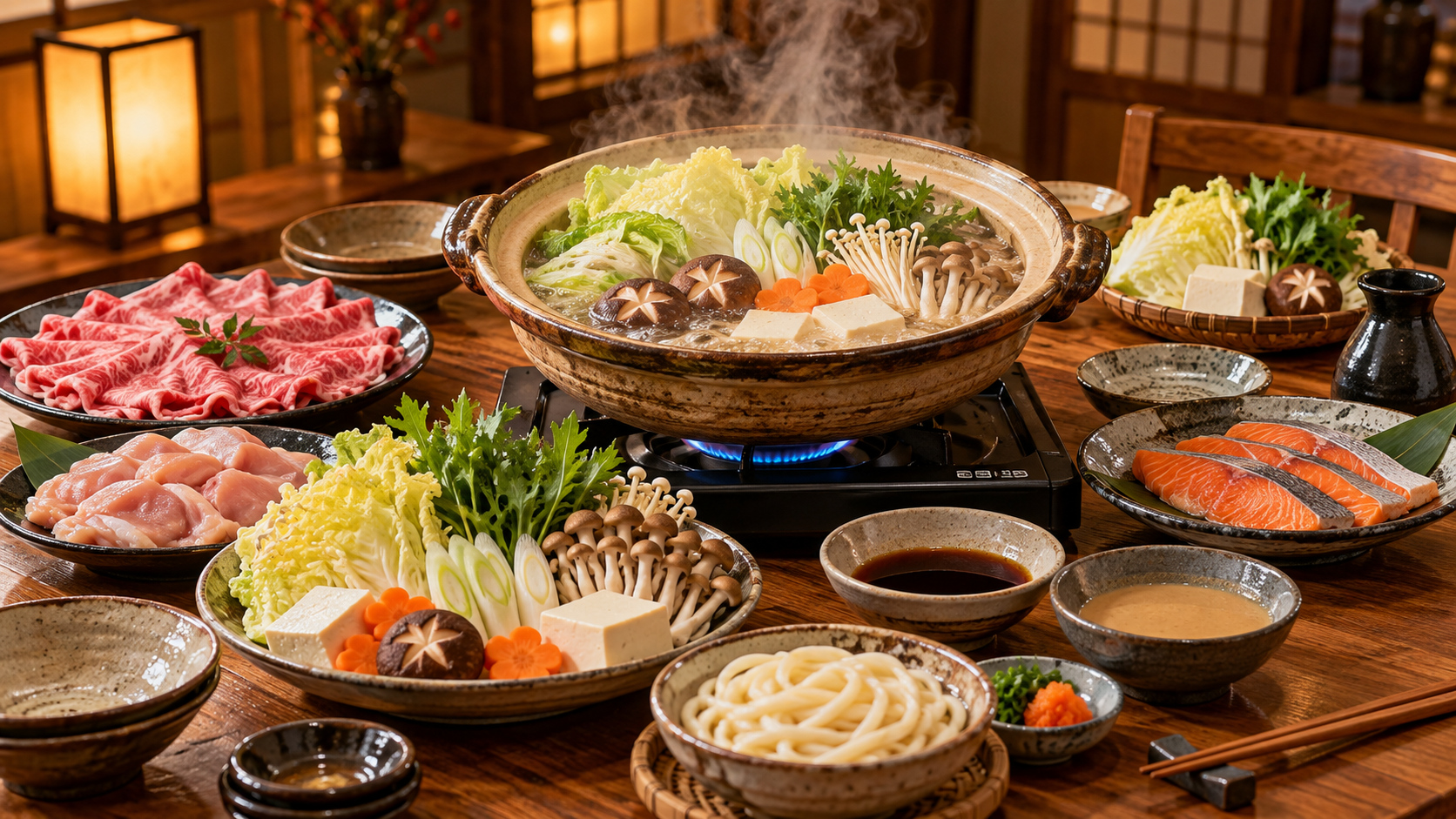
Nabe is less a single recipe than a shared way of eating: a pot of broth or seasoned liquid sits at the table while meat, seafood, tofu and vegetables cook together. The seven dishes below range from sweet sukiyaki and light shabu-shabu to Fukuoka’s rich motsunabe and Hokkaido’s salmon-and-miso Ishikari nabe. Use the flavor guide first, then check what the restaurant cooks for you, what you cook yourself and which final noodles or rice are available.
Sukiyaki: sweet-savory beef and vegetables
Sukiyaki combines thinly sliced beef with tofu, mushrooms, green onion, shirataki and other vegetables in a soy sauce, sugar and mirin-based seasoning. Many restaurants offer raw beaten egg as a dipping sauce, but it is optional and should be avoided by anyone who does not want raw egg. Cooking style varies: Kansai versions often begin by searing and seasoning the beef, while Kanto versions commonly use a prepared warishita sauce.
Shabu-shabu: quickly swish thin slices in broth
Shabu-shabu is usually lighter than sukiyaki. Diners move very thin slices of beef, pork or another protein through hot broth until safely cooked, then dip them in ponzu or sesame sauce. Vegetables and tofu cook in the same pot. Do not leave shared chopsticks or raw-meat utensils in the cooked-food area; follow the restaurant’s serving system and ask staff when unsure.
Chanko nabe: the hearty sumo-associated pot
Chanko refers broadly to food prepared for sumo wrestlers, while chanko nabe is the best-known restaurant version. Recipes vary widely, but chicken, meatballs, fish, tofu, napa cabbage, mushrooms and greens are common in dashi or chicken broth seasoned with salt, soy sauce or miso. Tokyo’s Ryogoku area is a natural place to try it, including restaurants connected with former wrestlers.
Motsunabe: Fukuoka offal, cabbage and chives
Motsunabe is a Fukuoka specialty built around beef offal, cabbage, garlic chives and a strongly flavored broth, often soy sauce, miso or salt based. The texture and richness of offal make it more adventurous than the other pots in this guide. A common Hakata finish is champon noodles added after the main ingredients are eaten.
Mizutaki: chicken-centered comfort food from Fukuoka
Mizutaki uses chicken and vegetables in a broth that highlights chicken flavor rather than a sweet or heavily seasoned sauce. At specialist restaurants, staff may first serve a cup of the broth before the remaining ingredients are eaten with ponzu and condiments. Rice can be added at the end to make zosui, using the concentrated soup without wasting it.
Oden: a casual simmered-pot classic
Oden keeps ingredients such as daikon, egg, konnyaku, tofu products and fish cakes simmering in a dashi-based broth. It is sold at specialist restaurants, izakaya and seasonally at convenience stores. The selection varies, so point to individual items or use their names. Fish-based dashi and fish cakes are common, which means a vegetable-looking piece does not make the broth vegetarian.
Ishikari nabe: Hokkaido salmon in miso broth
Ishikari nabe is a Hokkaido regional hot pot associated with the salmon-fishing area around the Ishikari River. Salmon and vegetables simmer in a kombu-based broth seasoned with miso; recipes may include cabbage, onion, daikon, tofu or mushrooms. It is particularly suited to a cold-weather Hokkaido trip and may be easier to find regionally or seasonally than sukiyaki and shabu-shabu.
Choose by flavor
Which Japanese hot pot fits your taste?
Beef, tofu and vegetables in a sweet soy seasoning.
Cook thin slices briefly, then choose ponzu or sesame sauce.
A filling sumo-associated pot with flexible ingredients.
Fukuoka offal hot pot with cabbage and chives.
Chicken flavor takes the lead, usually with ponzu.
Choose individual simmered items from a dashi broth.
A warming regional choice associated with Hokkaido.
At-a-glance comparison
Know the broth, protein and best finish
| Dish | Flavor | Main protein | Where to look | Typical finish |
|---|---|---|---|---|
| Sukiyaki | Sweet soy | Beef | Across Japan | Udon |
| Shabu-shabu | Light broth + dips | Beef or pork | Across Japan | Noodles or rice |
| Chanko nabe | Varies: salt, soy, miso | Chicken, fish or mixed | Tokyo, especially Ryogoku | Udon or zosui |
| Motsunabe | Rich, garlicky | Beef offal | Fukuoka | Champon noodles |
| Mizutaki | Chicken-forward | Chicken | Fukuoka | Zosui |
| Oden | Light dashi | Fish cakes, egg, tofu | Across Japan | Usually none |
| Ishikari nabe | Miso + salmon | Salmon | Hokkaido | Udon or rice |
Recipes and finishing dishes vary by restaurant and region. Treat this table as a menu decoder, then follow the restaurant’s sequence.
At the restaurant
A five-step ordering routine
- 1Check the minimum order
Some hot-pot courses require two or more diners or the same course for the whole table.
- 2Choose the broth or course
Motsunabe and shabu-shabu restaurants may offer several soup, meat or price levels.
- 3Ask who cooks
Staff may prepare the first round, or the table may control the heat and timing.
- 4Order additions before the finish
Add more vegetables, tofu or meat only if you still have room for noodles or rice.
- 5Choose shime
Shime means the final starch: udon, champon noodles or zosui are common choices.
Shared-pot etiquette
Cook safely without taking over the table
Use provided tongs or shared chopsticks for raw meat and clean chopsticks for eating.
Thin meat cooks quickly, but chicken, meatballs and seafood need enough time. Ask staff when uncertain.
Shared nabe is paced over the meal. Avoid removing all of one ingredient or stirring constantly.
At specialist sukiyaki or mizutaki restaurants, the service sequence may be part of the experience.
The final course
Do not miss the shime
Thick noodles absorb a sweet or savory broth and work especially well after sukiyaki or mixed nabe.
A classic Fukuoka finish for motsunabe, usually added to the remaining rich soup.
Rice simmered in the concentrated broth, often finished with egg. Common after mizutaki and other lighter pots.
Dietary and allergy checks
- Vegetarian or vegan: vegetable ingredients may still cook in fish, chicken or meat broth.
- Gluten: soy sauce, noodles, fish cakes and prepared sauces may contain wheat.
- Egg: raw egg is commonly offered with sukiyaki; zosui may also use egg.
- Seafood: dashi, fish cakes, oyster products and shared broth can contain fish or shellfish.
- Alcohol: mirin and sake can be used in broths and sauces.
For a serious allergy, show the exact ingredient in Japanese and ask about the broth, sauce, fish cakes and shared kitchen—not only the visible protein.
Official sources
Information reviewed October 7, 2026. Ingredients, serving order, minimum party size, allergens and seasonal availability vary by restaurant.
- JNTO: Winter delicacies—all about nabe
- Ministry of Agriculture, Forestry and Fisheries: Chanko nabe
- Fukuoka City Official Tourist Guide: Motsunabe and mizutaki
- Ministry of Agriculture, Forestry and Fisheries: Wakadori no mizutaki
- Ministry of Agriculture, Forestry and Fisheries: Ishikari nabe
- Ministry of Agriculture, Forestry and Fisheries: Tokyo regional cuisines, including sukiyaki and oden
Opening hours, prices, reservation rules and transport details can change. Confirm important details with the official operator before your visit.