
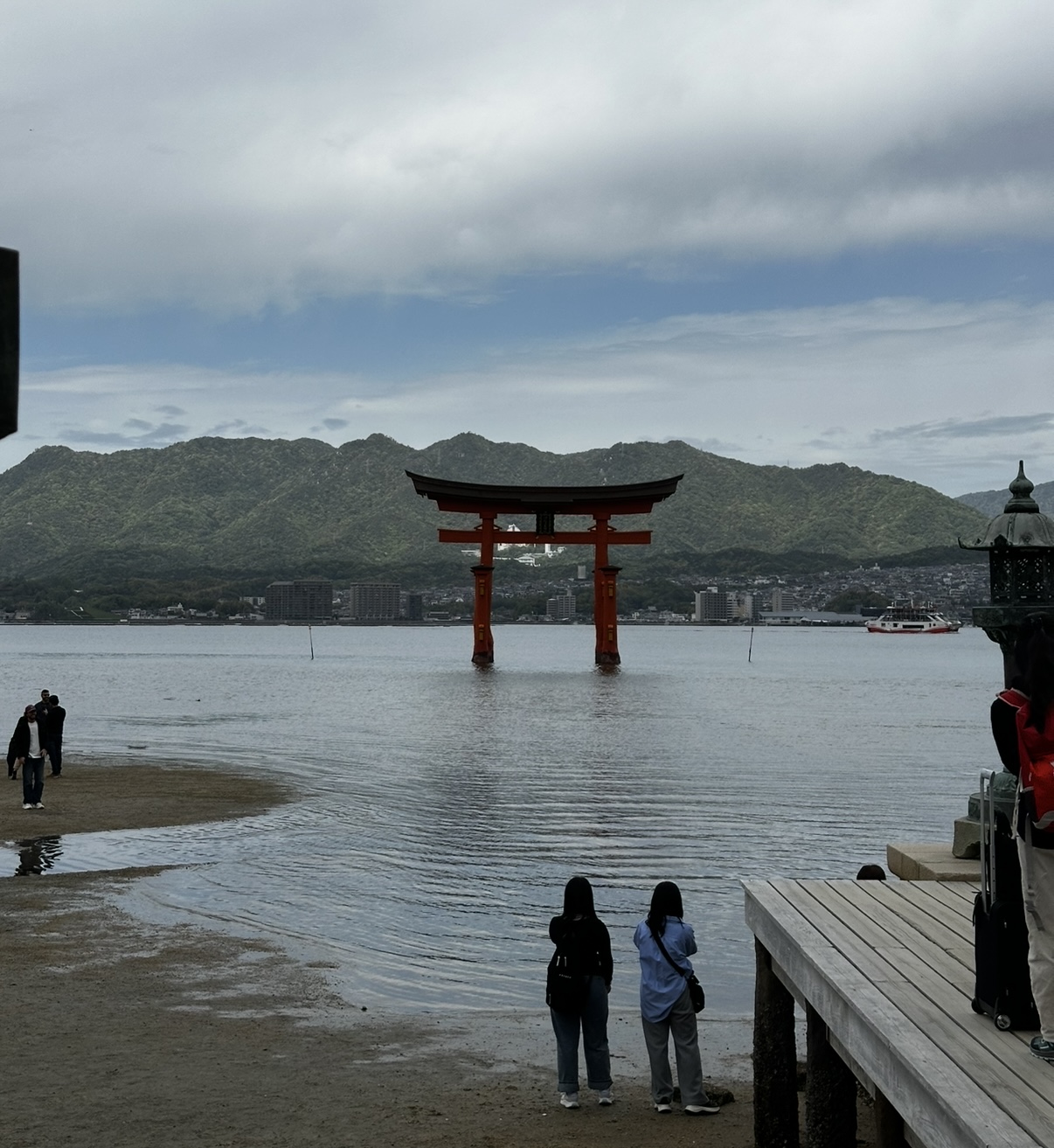
“Beautiful” can mean a snow-covered village, a sacred waterfall, a mossy forest, a mountain valley or a bay filled with pine-covered islands. It also depends on timing: flowers fade, mountain roads close, clouds hide Mount Fuji and remote islands need more than a spare afternoon. This curated list is therefore a planning tool rather than an absolute ranking. Compare the ideal season, travel effort and minimum useful stay for each place, then choose one or two that fit the route you are already taking through Japan. The Miyajima photograph in this guide was taken by Japan Finds.
Lake Kawaguchiko: Mount Fuji views with a weather backup
Lake Kawaguchiko is the most accessible of the Fuji Five Lakes and offers views from many points around the shore. Crisp winter air often gives the clearest visibility, while spring blossoms and early-summer lavender create seasonal foregrounds. Mount Fuji can disappear behind cloud at any time, especially during humid or rainy periods, so stay overnight when the view matters and plan lakeside walks, museums or an onsen as the backup.
Arashiyama: bamboo, river scenery and temple gardens
Arashiyama is more than one short bamboo path. Combine the grove with Tenryuji’s garden, Togetsukyo Bridge and one quieter temple or villa to understand the wider landscape. Spring and autumn bring strong color as well as the heaviest crowds. Arrive early, stay on public paths and do not block narrow lanes for photographs.
Kamikochi: the Japan Alps without private-car access
Kamikochi pairs the Azusa River with views of the Hotaka Range and walks ranging from an easy valley route to serious mountain hikes. The main visitor season normally runs from mid-April to mid-November, and private cars are restricted, requiring a bus or taxi transfer. Summer holidays and autumn weekends are especially busy. Treat winter as a separate expedition requiring appropriate experience and current safety information.
Shirakawa-go: a living village, not an outdoor set
Shirakawa-go’s steep-roofed gassho-zukuri houses sit in a mountain valley that changes dramatically across the seasons. Winter snow is famous but brings cold, transport risk and limited-capacity illumination events; some events require advance reservations. Several buildings remain private homes. Use designated viewpoints and paths, respect closed property and consider an overnight stay rather than a rushed bus turnaround.
Biei and Furano: Hokkaido fields that change month by month
Biei’s rolling agricultural landscape, Blue Pond and flower gardens pair naturally with Furano’s seasonal fields. JNTO identifies mid-June to early August as the main flower-viewing period in Furano, with many blooms peaking in July, but exact timing varies. A car makes scattered stops easier; travelers using public transport should build around current trains, buses or sightseeing services. Never enter working farmland for a photograph.
Matsushima Bay: pine islands, temples and a year-round cruise
Matsushima Bay contains roughly 260 pine-covered islands and is traditionally counted among Japan’s three celebrated scenic views. Walk the shore and bridge-linked islands, visit Zuiganji and consider a cruise for a different perspective. The tourist area is reached from Matsushimakaigan Station rather than the less convenient Matsushima Station. One day from Sendai is enough for a focused first visit.
Miyajima: a sacred island shaped by tides and time
Itsukushima Shrine and its offshore torii change character with the tide: high water creates the floating impression, while low water exposes the shore. The island also rewards a full day with Daishoin, Mount Misen and seasonal maple color. Check tide, ropeway and shrine information without forcing the whole itinerary around one photograph. A visitor tax is generally collected with the ferry journey.
Nachi Falls: sacred landscape on the Kii Peninsula
Nachi Falls drops 133 meters through a forested sacred landscape beside Kumano Nachi Taisha and Seigantoji. The classic scene is not a single roadside stop: bus access, stone stairs and the Daimonzaka section of the Kumano Kodo deserve time. Base in Kii-Katsuura or the wider Kumano area instead of treating Nachi as a casual detour from central Osaka or Kyoto.
Takachiho Gorge: volcanic cliffs, waterfall and reservation risk
Takachiho Gorge combines columnar volcanic cliffs, clear water and the 17-meter Manai Falls. The paved upper path provides views without a boat, while the rowboats offer the famous water-level perspective when operating. Public transport is limited and weather can affect access, so confirm the latest boat reservation, road and bus information. An overnight stay also makes room for the area’s shrines and evening kagura.
Yakushima: ancient cedar forest that requires real preparation
Yakushima is a UNESCO-listed island of ancient cedar forest, steep mountains, waterfalls and beaches. Shiratani Unsuikyo offers several hiking options, but the island is famously wet and conditions change quickly. Allow at least two or three nights, carry proper rain gear and choose a route suited to your fitness. Flights and ferries can be affected by weather, making a same-day onward connection a fragile plan.
Start with the calendar
Choose a beautiful place by season
Use flexible dates for blossoms and keep a weather backup. Both are easy additions to common first-trip routes.
Choose Hokkaido for fields and flowers, or the Japan Alps for river and mountain scenery. Reserve transport early in peak periods.
Color timing varies by elevation and region. Build margin for crowds, road traffic and weather.
Choose the village for snow scenery or the lake for a better chance of crisp Fuji views. Do not assume snow or visibility is guaranteed.
Best planning rule: choose the place that fits your route and season. A remote “must-see” becomes a poor choice when it consumes two travel days or depends on a risky connection.
Reality check
Compare the ten places before adding one to your trip
| Place | Best fit | Minimum useful time | Planning difficulty |
|---|---|---|---|
| Lake Kawaguchiko | Fuji views, lake and onsen | Full day; one night is safer for views | Easy–moderate; weather dependent |
| Arashiyama | Kyoto scenery and temple gardens | Half to full day | Easy; crowd timing matters |
| Kamikochi | Alpine walking and mountain views | Full day from Matsumoto; overnight for hiking | Moderate; seasonal bus access |
| Shirakawa-go | Mountain village and vernacular architecture | Half day; overnight for slower travel | Moderate; bus planning required |
| Biei and Furano | Fields, flowers and wide landscapes | One to two days | Moderate; car is useful |
| Matsushima Bay | Coast, islands, temples and seafood | Full day from Sendai | Easy |
| Miyajima | Shrine, tides, mountain and old streets | Full day; overnight for quiet hours | Easy–moderate |
| Nachi Falls | Sacred waterfall and pilgrimage landscape | Full day from a local base | Moderate–hard; long approach |
| Takachiho Gorge | Gorge, waterfall and mythology | Full day; overnight recommended | Hard without a car |
| Yakushima | Ancient forest and serious nature | At least two to three nights | Hard; weather and hiking logistics |
Do not connect dots across the whole map
Four realistic ways to place these landscapes in an itinerary
Add a full day or overnight from Tokyo. Keep the schedule flexible enough to respond to the Fuji forecast.
Use several nights around Matsumoto, Takayama or Kanazawa. Confirm seasonal transport before combining the two.
Place these on separate days within a standard Kansai–Hiroshima journey. Add Nachi only with extra nights on the Kii Peninsula.
Give Biei–Furano its own Hokkaido block. Treat Takachiho and Yakushima as separate Kyushu anchors rather than quick additions.
How many can you reasonably include?
A first Tokyo–Kyoto–Osaka trip has room for Lake Kawaguchiko or Arashiyama, plus Miyajima only if Hiroshima is already included.
For example, add the central mountains to the classic route or continue from Hiroshima to Miyajima. Avoid flying across Japan only for a photograph.
Yakushima, Takachiho or a longer Hokkaido section becomes realistic when delays and slower travel do not break the rest of the trip.
Beautiful places still have rules and residents
- Stay out of private fields and homes. This is especially important in Biei, Furano and Shirakawa-go.
- Follow drone restrictions. National parks, sacred sites, villages and crowded attractions may prohibit or tightly control flights.
- Do not block paths for a photo. Arashiyama, shrine approaches, bridges and trail viewpoints need to remain usable.
- Carry out waste and protect trails. Remote nature is not a studio set; weather and wildlife take priority over the shot.
- Ask before photographing people. Residents, worshippers and other visitors are part of a real place, not background decoration.
Official sources
Information reviewed October 10, 2026. Seasonal access, flowering, foliage, visibility, boats, buses and trails can change; confirm current conditions before travel.
Opening hours, prices, reservation rules and transport details can change. Confirm important details with the official operator before your visit.