
Nikko is close enough to Tokyo for a day trip, but its main sights are spread between two distinct areas. The World Heritage district near central Nikko contains ornate shrines, temple halls and historic architecture, while Oku-Nikko places Kegon Falls, Lake Chuzenji and highland scenery farther into the mountains. A satisfying visit starts by choosing one priority instead of treating every attraction as a single walkable circuit. This guide explains the ten most useful stops, two realistic day-trip routes and when an overnight stay is the better decision.
Shinkyo Bridge: begin at the gateway to sacred Nikko
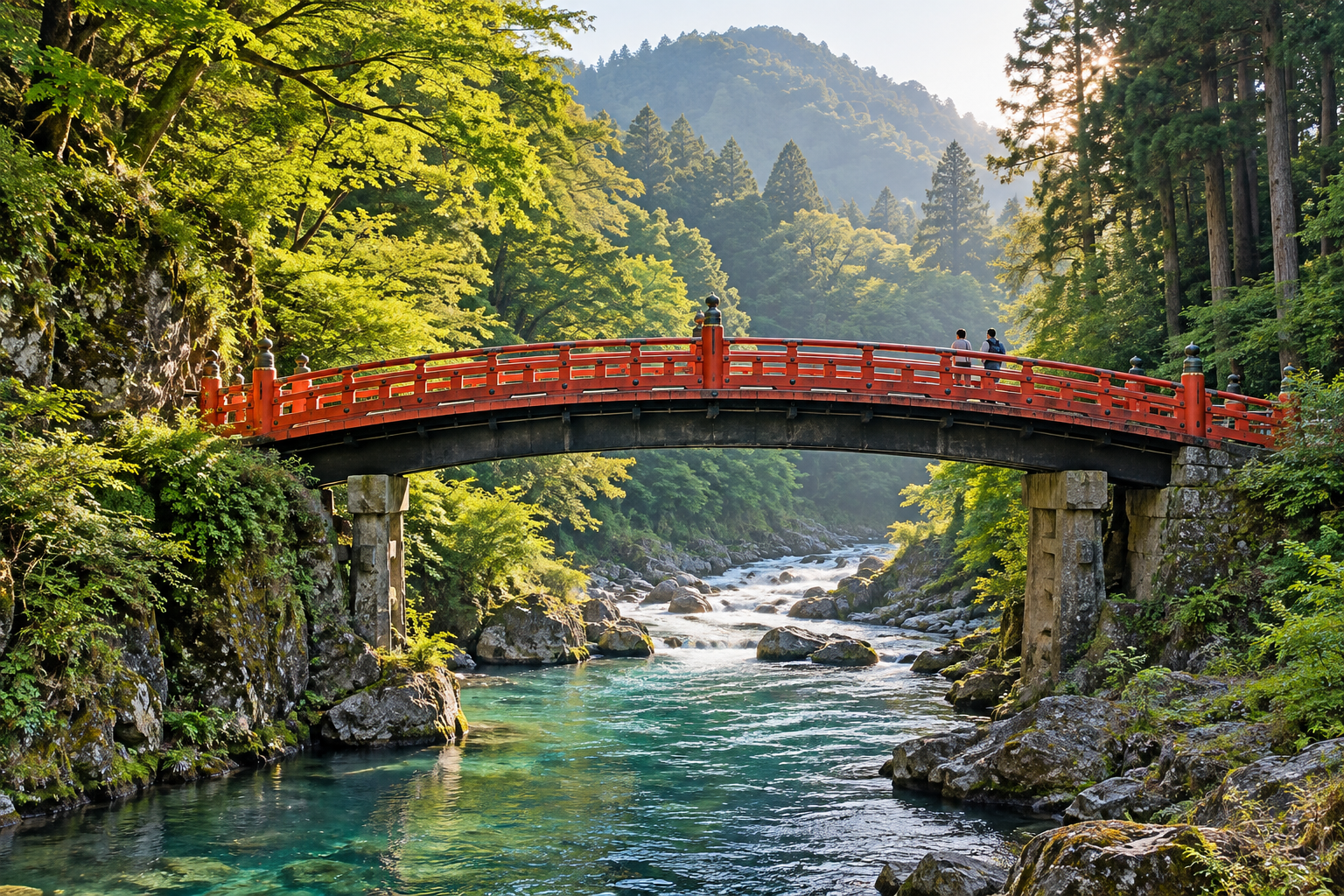
The vermilion Shinkyo Bridge crosses the Daiya River at the entrance to the shrine-and-temple district. It belongs to Futarasan Shrine and forms part of the UNESCO World Heritage property. Arriving here first makes the geography easier to understand: the major religious sites rise through the forest beyond the bridge. Photograph it from the public viewpoint, then check the current crossing hours and fee if you want to step onto the bridge itself.
Rinnoji Temple: understand Nikko before the ornate shrines
Rinnoji is one of the three components of the UNESCO-listed Shrines and Temples of Nikko. Its Sanbutsudo hall and associated sub-temples introduce the Buddhist side of the complex, which is easy to overlook when visitors rush directly to Toshogu. Opening arrangements and restoration work can change, so confirm the official information. Allow enough time to look rather than treating the hall only as a checkpoint on the way uphill.
Toshogu Shrine: see the craftsmanship connected to Tokugawa Ieyasu
Nikko Toshogu enshrines Tokugawa Ieyasu and is the most elaborate stop in the central district. Carved gates, richly decorated buildings and familiar motifs such as the three wise monkeys attract the largest crowds. The complex is active sacred space as well as a major heritage site. Follow one-way routes and photography restrictions, speak quietly near worship areas and expect the visit to take longer than a quick photo stop.
Futarasan Shrine: step into Nikko’s older mountain faith
Futarasan Shrine is dedicated to the sacred mountains associated with Nikko and predates the Toshogu complex. Its main central precinct sits beside Toshogu, making it easy to include on a heritage-focused day. The wider shrine network extends into Oku-Nikko, including sites near Lake Chuzenji. At the entrance, follow ordinary shrine etiquette: walk respectfully, use purification facilities when open and check signs before photographing inner areas.
Taiyuin: find a quieter, darker counterpoint to Toshogu
Taiyuin is the mausoleum of Tokugawa Iemitsu and is administered as part of Rinnoji. Its sequence of gates, stone lanterns and forested approaches feels more restrained than Toshogu while still displaying detailed Edo-period craftsmanship. Because it lies beyond Futarasan Shrine, it fits naturally at the end of a central heritage circuit. Do not add it if doing so would make you rush the earlier sacred sites before closing time.
Kanmangafuchi Abyss: add a riverside walk after the temples
Kanmangafuchi follows the Daiya River through a wooded gorge and is known for its line of stone Jizo figures. It offers a calmer contrast after the busy World Heritage precinct, but it requires additional walking and is not simply inside the temple compound. Surfaces can be uneven or slippery after rain. Visit in daylight, wear suitable shoes and leave this walk out when winter conditions, fatigue or a tight train schedule make the route uncomfortable.
Nikko Tamozawa Imperial Villa: choose it for architecture and gardens
The Nikko Tamozawa Imperial Villa Memorial Park preserves a large residence that combines architectural features from different periods. It is a strong alternative for travelers more interested in interiors, gardens and modern imperial history than another long forest walk. It sits beyond the core shrine area toward Kanmangafuchi. Check its current opening calendar and admission information because closures and seasonal hours can affect a carefully timed day trip.
Kegon Falls: make it the anchor of an Oku-Nikko day
Kegon Falls drops 97 meters from Lake Chuzenji and is one of Oku-Nikko’s defining sights. Official tourism information places the area about 40 minutes by bus from the main Nikko stations under normal conditions. A paid elevator leads to a lower observation platform, while another viewpoint is available near the top. Mountain traffic, weather and seasonal crowds can extend travel time, so build the nature day around the falls rather than adding them casually after every temple.
Lake Chuzenji: slow down beside Japan’s highest natural lake
Lake Chuzenji sits at roughly 1,269 meters above sea level and has a shoreline of about 25 kilometers. The lakeside around Chuzenji Onsen works well with Kegon Falls for a manageable Oku-Nikko day. Short waterfront walks, temple visits or a boat ride may be possible depending on season and operating schedules. Temperatures can be noticeably cooler than Tokyo, so check the mountain forecast and carry an extra layer even when the city feels mild.
Senjogahara and Oku-Nikko: save the highlands for enough time
Senjogahara is a highland marsh at about 1,400 meters with boardwalk hiking and wide mountain views. Reaching it requires continuing well beyond Lake Chuzenji by bus, which makes it a poor add-on to a full central temple day. Choose it as the main purpose of a longer nature day or include it on an overnight stay with Yumoto Onsen. Trail conditions, snow, buses and daylight vary by season; use current official updates before setting out.
Choose before you leave Tokyo
Which Nikko trip fits this day?
Choose Shinkyo, Rinnoji, Toshogu, Futarasan and one optional final stop. This is the best first visit for history, architecture and sacred sites.
Build the day around Kegon Falls and Lake Chuzenji. Continue to Senjogahara only when buses, daylight and walking conditions leave enough margin.
Use one day for the World Heritage district and the next for the lake, falls and highlands. This removes the pressure to race between distant areas.
First-trip rule: Do not plan Toshogu, every central site, Kegon Falls, Lake Chuzenji and Senjogahara as one relaxed day. Mountain buses and seasonal traffic make that plan fragile.
Route comparison
Central Nikko and Oku-Nikko are different day trips
| Plan | Best for | Main stops | Transport pattern |
|---|---|---|---|
| World Heritage day | First visits, history and architecture | Shinkyo, Rinnoji, Toshogu, Futarasan; Taiyuin or Kanmangafuchi if time remains | Train to Nikko, then local bus and walking |
| Oku-Nikko nature day | Waterfalls, lakes and mountain scenery | Kegon Falls and Lake Chuzenji; optional Senjogahara with an early start | Train to Nikko, then a longer mountain-bus ride |
| One night in Nikko | Travelers who want both without rushing | Central heritage on day one; Oku-Nikko on day two | Stay near central Nikko or Chuzenji/Yumoto to match the second day |
One-day plan A
A realistic World Heritage route
- 1Arrive early and start at Shinkyo
Use the bridge as the visual gateway, then continue into the sacred district before tour groups peak.
- 2Visit Rinnoji before Toshogu
This sequence introduces the Buddhist side of the UNESCO property and reduces backtracking.
- 3Give Toshogu the largest time block
Expect gates, stairs, crowds and photography restrictions to slow the visit.
- 4Continue to Futarasan
The shrine sits beside Toshogu and adds the older mountain-worship story to the day.
- 5Choose one final stop
Pick Taiyuin for another heritage site, Tamozawa for architecture or Kanmangafuchi for a riverside walk. Do not force all three.
One-day plan B
An Oku-Nikko nature route
- 1Take an early train from Tokyo
At Nikko, transfer promptly to the bus for Chuzenji Onsen and check the return timetable before climbing into the mountains.
- 2Begin with Kegon Falls
Visit while energy and schedule margin are highest; choose the lower observatory only if its current operation and queue fit the day.
- 3Walk the Lake Chuzenji area
Leave time for the waterfront, lunch and whichever seasonal attraction is operating rather than chasing a long checklist.
- 4Make a deliberate Senjogahara decision
Continue only with enough daylight, suitable trail conditions and a workable bus home. Otherwise enjoy the lake and return calmly.
Stay overnight when Nikko is more than a checklist
Shinkyo, Rinnoji, Toshogu and Futarasan, followed by one quieter stop.
Kegon Falls and Lake Chuzenji, with Senjogahara or Yumoto Onsen if the season and timetable suit.
Choose a central Nikko base for easy arrival and the heritage sites, or an Oku-Nikko base when the lake, highlands and onsen are the main purpose. Check luggage storage and bus access before booking.
Getting there
Transport from Tokyo and pass choices
Tobu limited-express trains reach Tobu-Nikko in about 1 hour 50 minutes on direct services. A basic fare or relevant pass and a separate limited-express reserved-seat ticket are required.
Through services using JR and Tobu lines take roughly two hours. Tobu’s Nikko passes do not cover the JR/Tobu route from these stations, so compare the complete ticket cost and convenience.
The official two-day pass is listed at ¥3,000 for adults and ¥1,500 for children at the time of review. It covers the designated central-area transport; site admissions and limited-express tickets are separate.
The official four-day pass is listed at ¥8,000 for adults and ¥4,000 for children at the time of review. It is the relevant option for designated transport toward Lake Chuzenji and Oku-Nikko; check its exact coverage before purchase.
Prices and coverage can change. Compare the official pass map with your exact route, then add any required limited-express ticket and attraction admissions.
Season, weather and current closure notes
- Spring and summer: Central Nikko can be mild while Oku-Nikko remains cooler. Carry rain protection and a warm layer for higher elevations.
- Autumn: Foliage brings heavy road and bus demand. Start early, reduce the number of stops and keep a generous return margin.
- Winter: Snow and ice affect mountain walks and roads. Use official condition reports and suitable footwear; Senjogahara may require winter equipment.
- Akechidaira Ropeway: Tobu states that service is suspended from January 16, 2026 through August 31, 2027, with a possible extension. Do not build a current itinerary around it.
Small choices that improve the day
Screenshot train and bus times before entering areas with weak reception.
Use station lockers, staffed storage or hotel arrangements instead of carrying a large case uphill.
Tofu-skin dishes are a Nikko specialty, but check restaurant hours and avoid missing the last practical bus or train for one meal.
Follow signs, keep voices low, avoid blocking worshippers and confirm photography rules in each building or precinct.
Official sources
Information reviewed October 9, 2026. Fares, timetables, admissions, operating periods and trail conditions can change; confirm the official source for your travel date.
- Tobu Railway: Access to Nikko
- Tobu Railway: NIKKO PASS
- Tobu Railway: NIKKO PASS All Area and service notices
- Tobu Railway: Limited Express ticket information
- Nikko Official Guide: Getting to and around Nikko
- Nikko Official Guide: Nikko Toshogu Shrine
- Nikko Official Guide: Shinkyo Bridge
- Nikko Official Guide: Kegon Falls
- Nikko Official Guide: Lake Chuzenji
- Nikko Official Guide: Senjogahara
- UNESCO World Heritage Centre: Shrines and Temples of Nikko
Opening hours, prices, reservation rules and transport details can change. Confirm important details with the official operator before your visit.